Masoveria L'Aguilar
After spending Christmas in Barcelona, we left the city for a 2-part vacation in the Catalan countryside. We opted against trying to go farther afield, not knowing where the mobility restrictions might land for the holiday season. This turned out to be a good decision: many autonomous communities kept their borders closed, and two Catalan comarcas (counties) were closed to travelers due to high Covid caseloads. Luckily the closures didn't affect us.
We spent 8 nights near Vic, about an hour north of Barcelona, in an area of rolling farmland and low mountains.
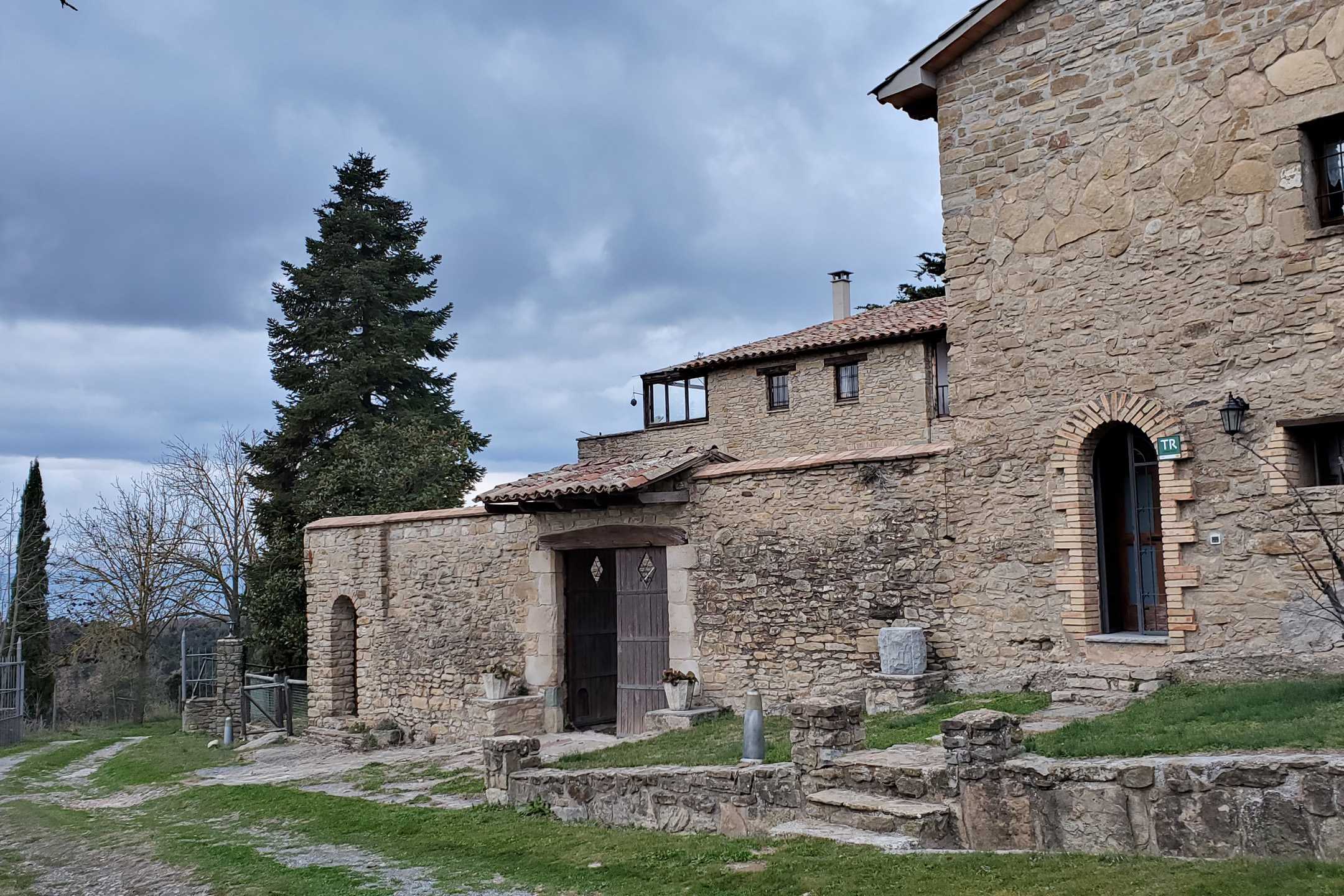
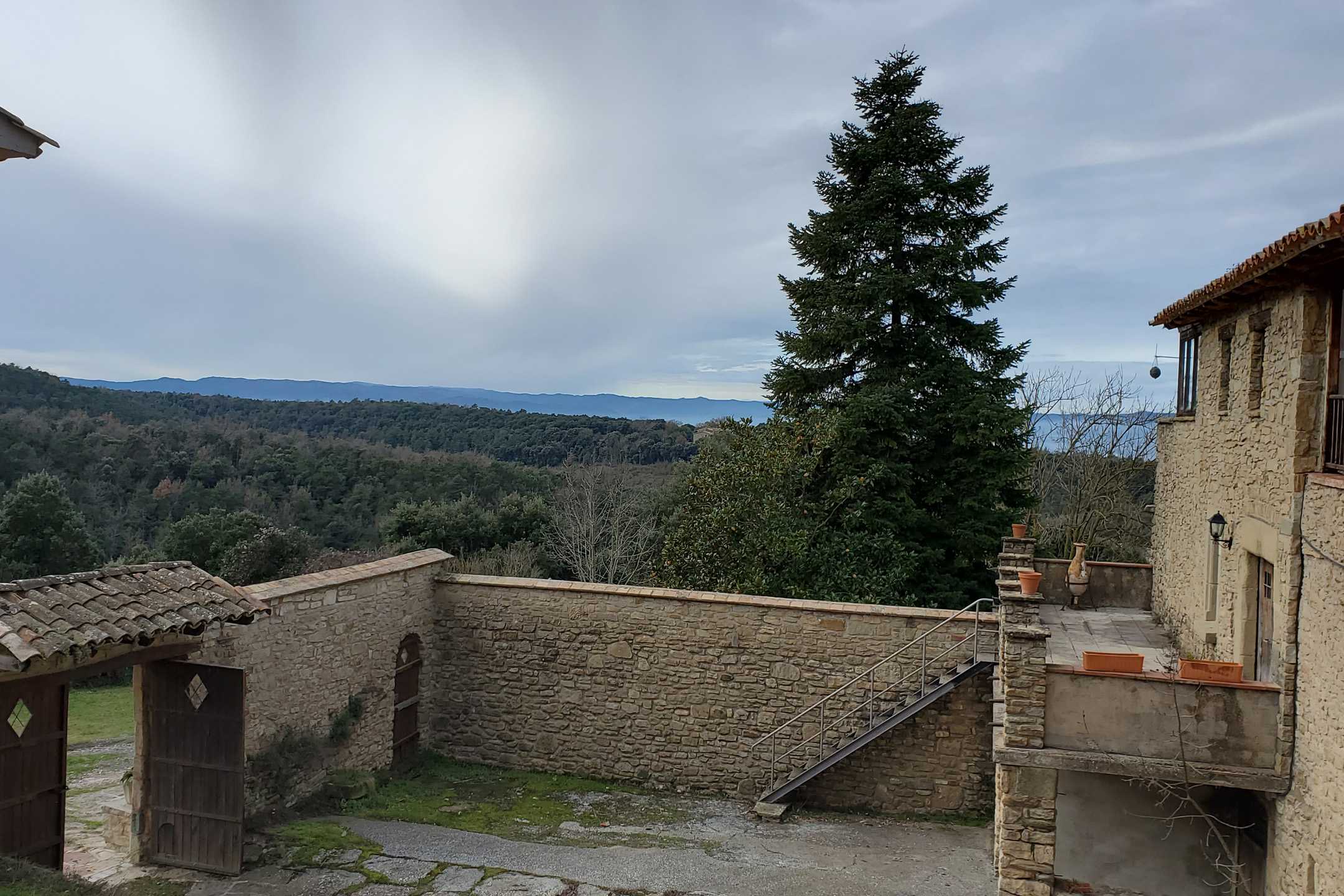
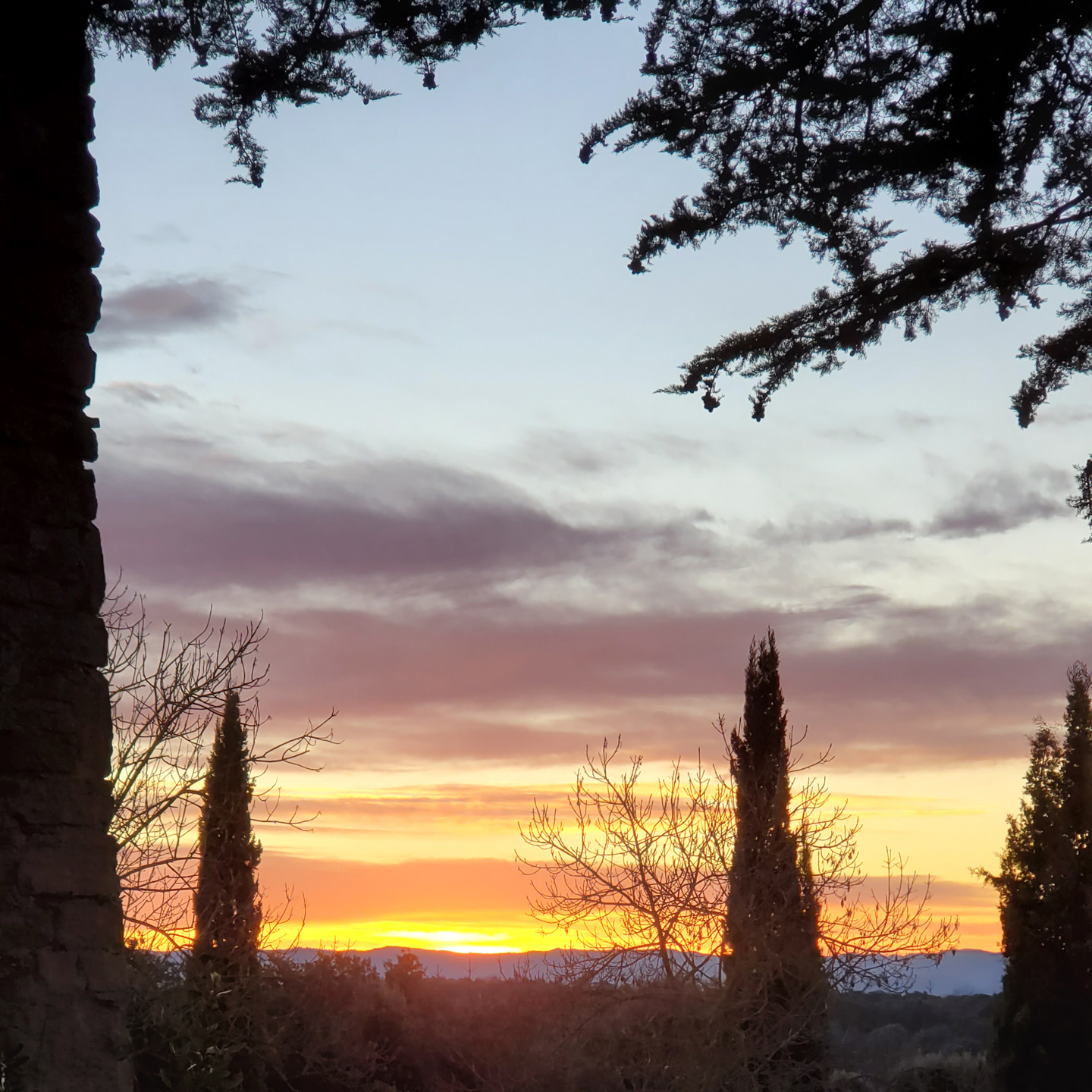
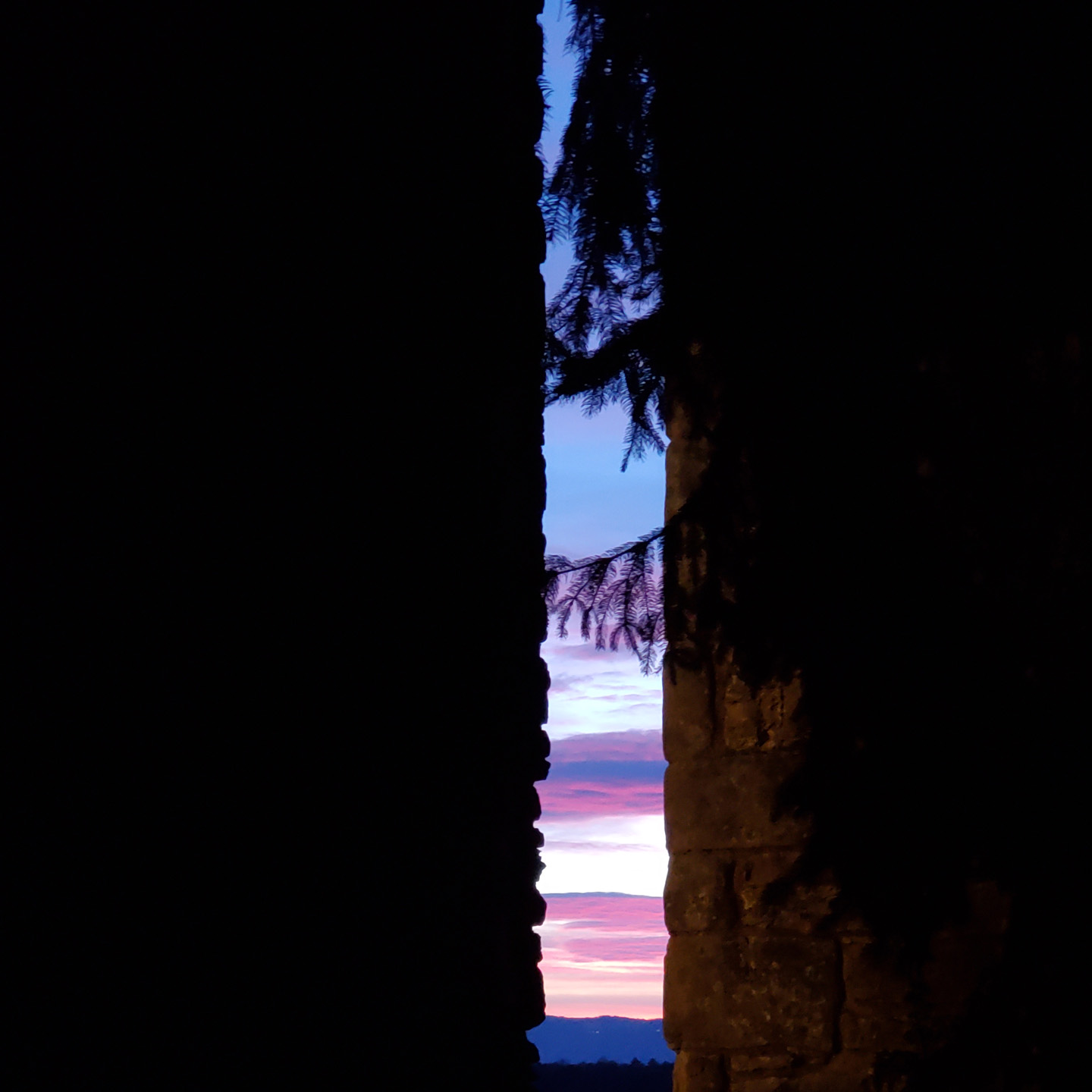
We rented part of a casa rural – a stone farmhouse that looked to be quite old, with a large courtyard, a tower and a resident flock of wild peacocks. It had distant views of the snowy Pyrenees, and beautiful sunsets.
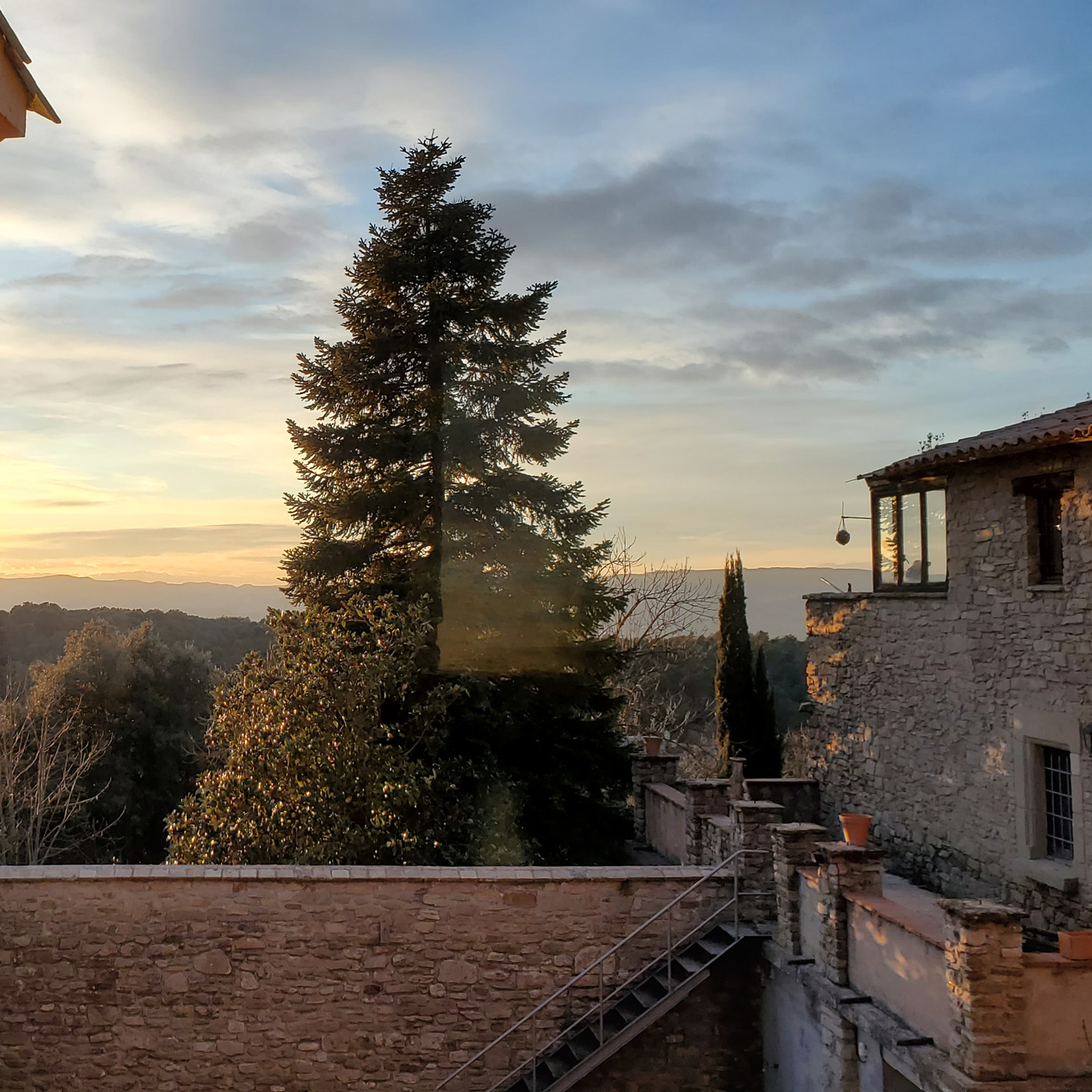
We made good use of the fireplace (in our opinion a must for winter rentals), collecting firewood from the surroundings so as not to deplete the host's stash. The house was a short walk – through a derelict homestead – from a signed hiking trail network, and from there we explored the surrounding land. There was a wide choice of routes, and we could walk for as little as an hour round-trip to find a beautiful vista or a tiny hermitage church.
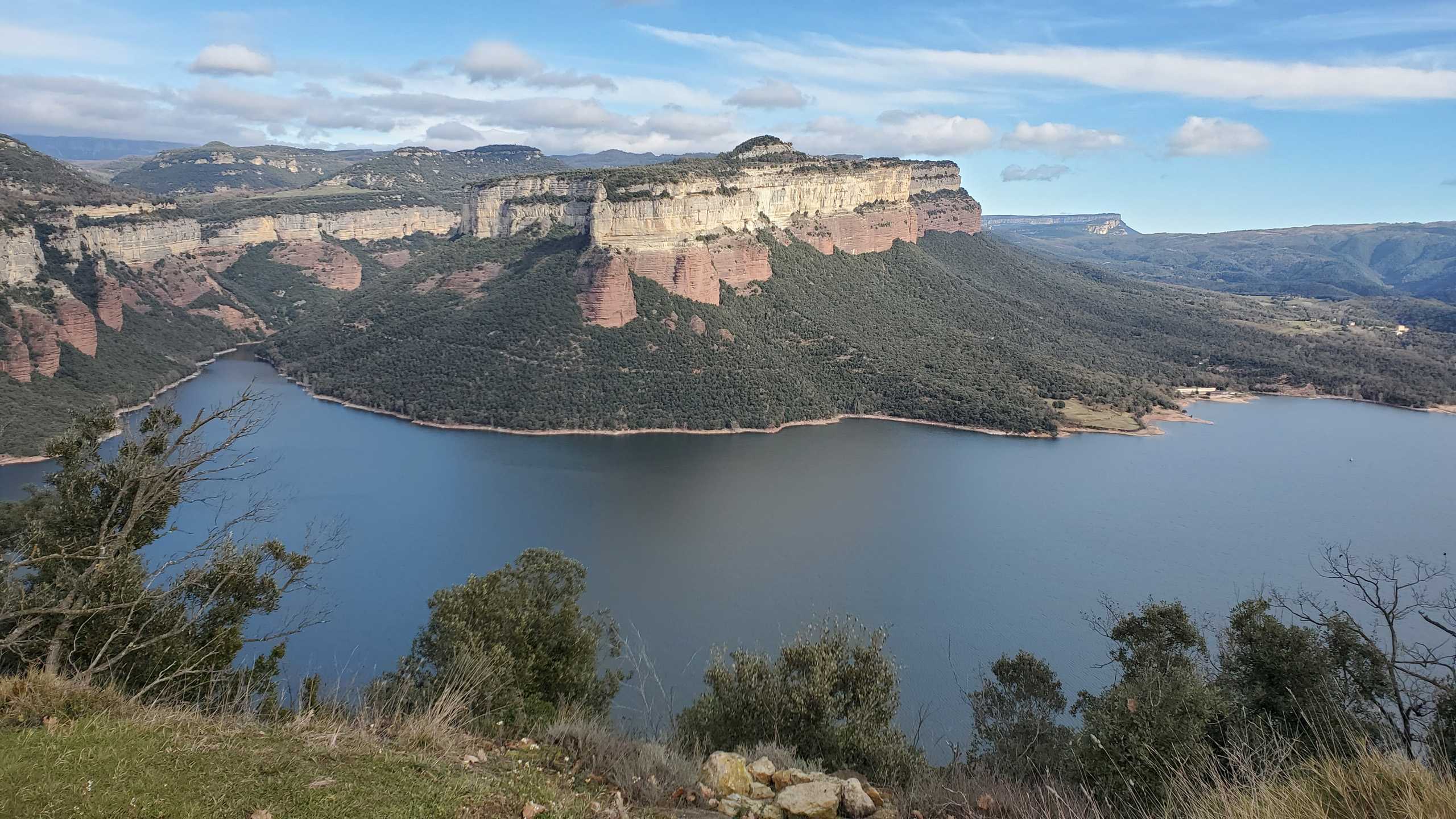
Though we weren't at high elevation (600-900m), the land is striking. We saw countless dramatic cliffs and rock formations, a remarkably thin peninsula, and the reservoir Pantá de Sau which zig-zags among a multiplicity of rocky outcroppings and yet seems impossibly calm.
Views from around els Munts, about a 15-20 minute walk from the house:
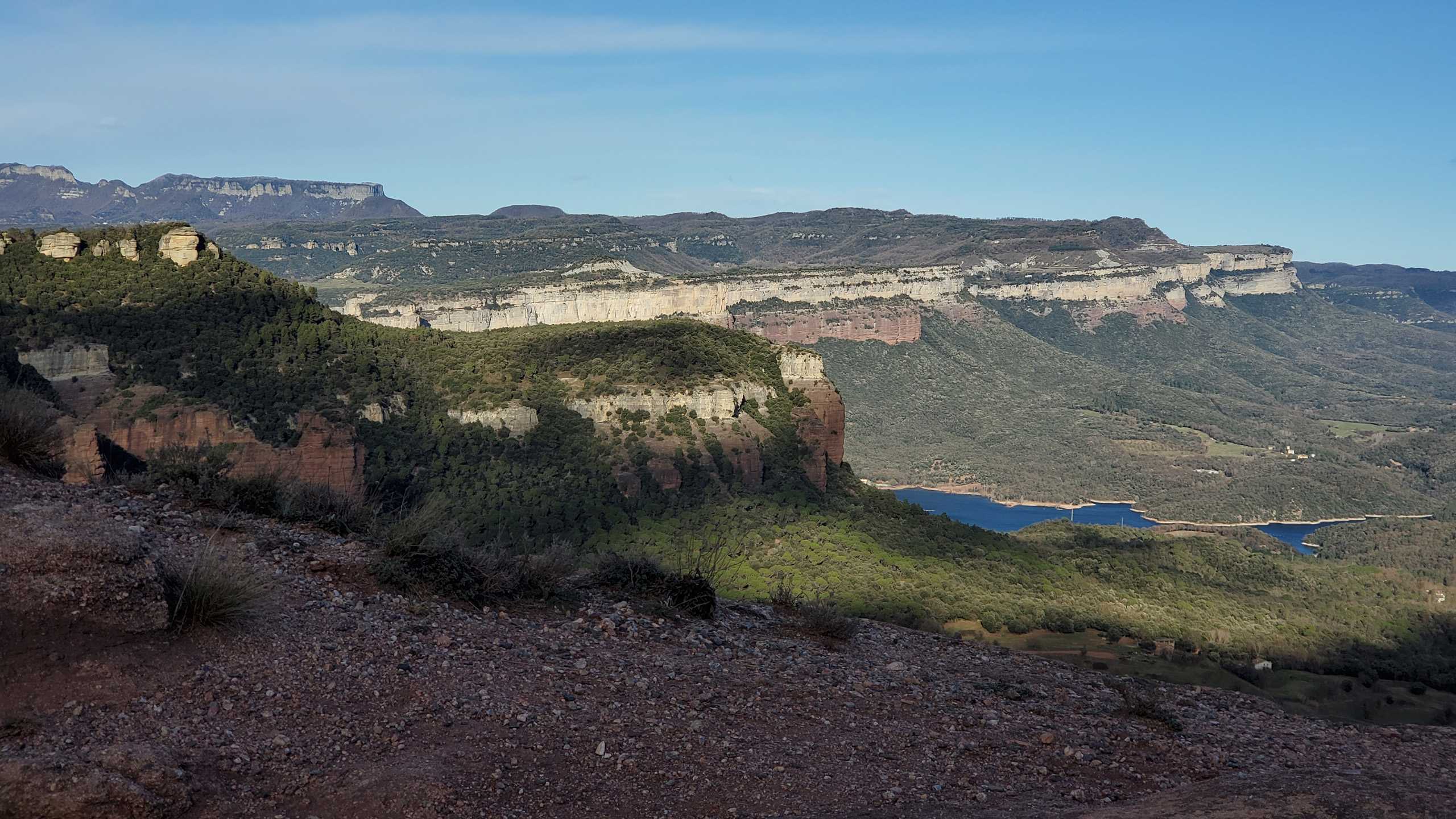
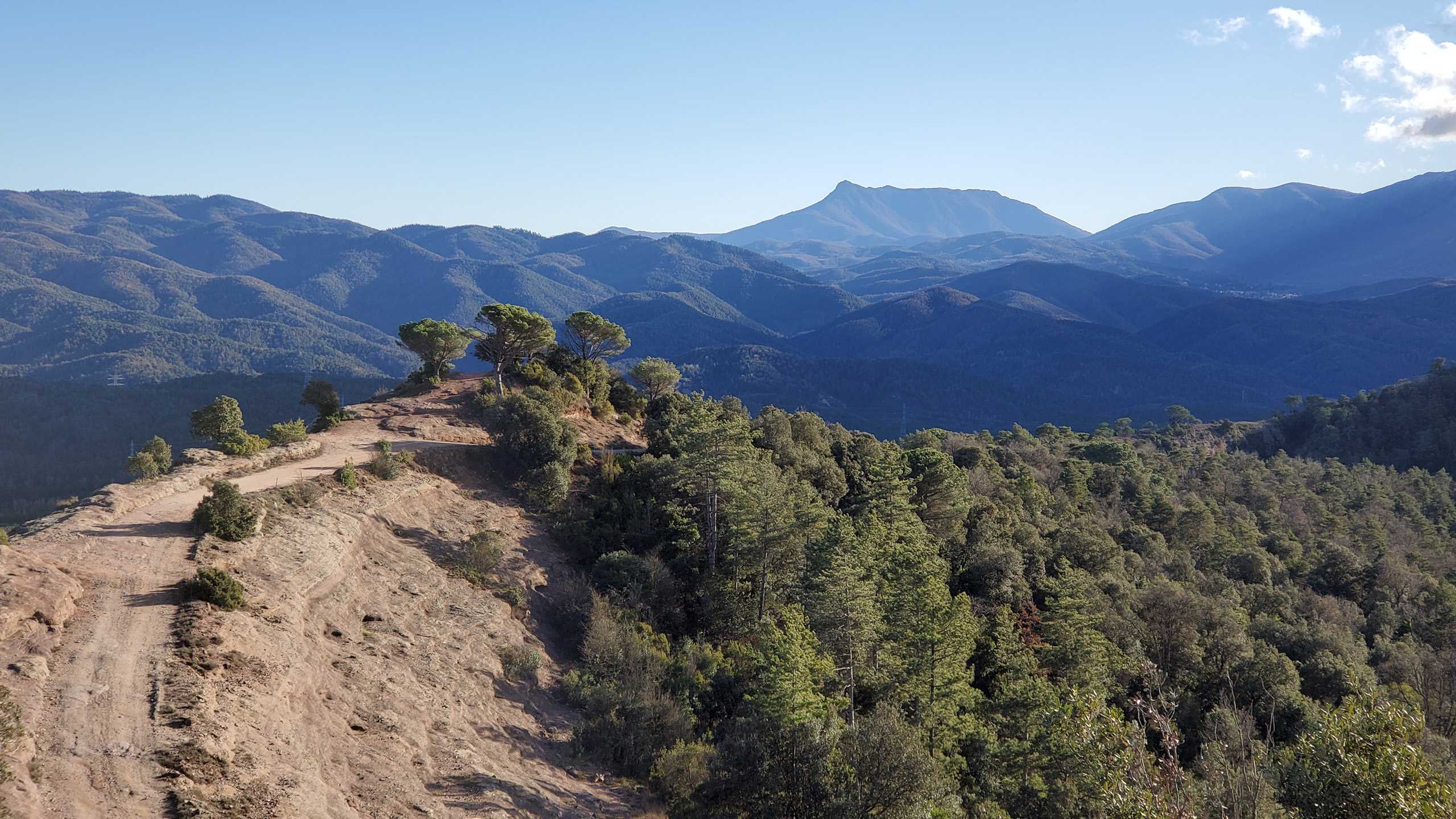
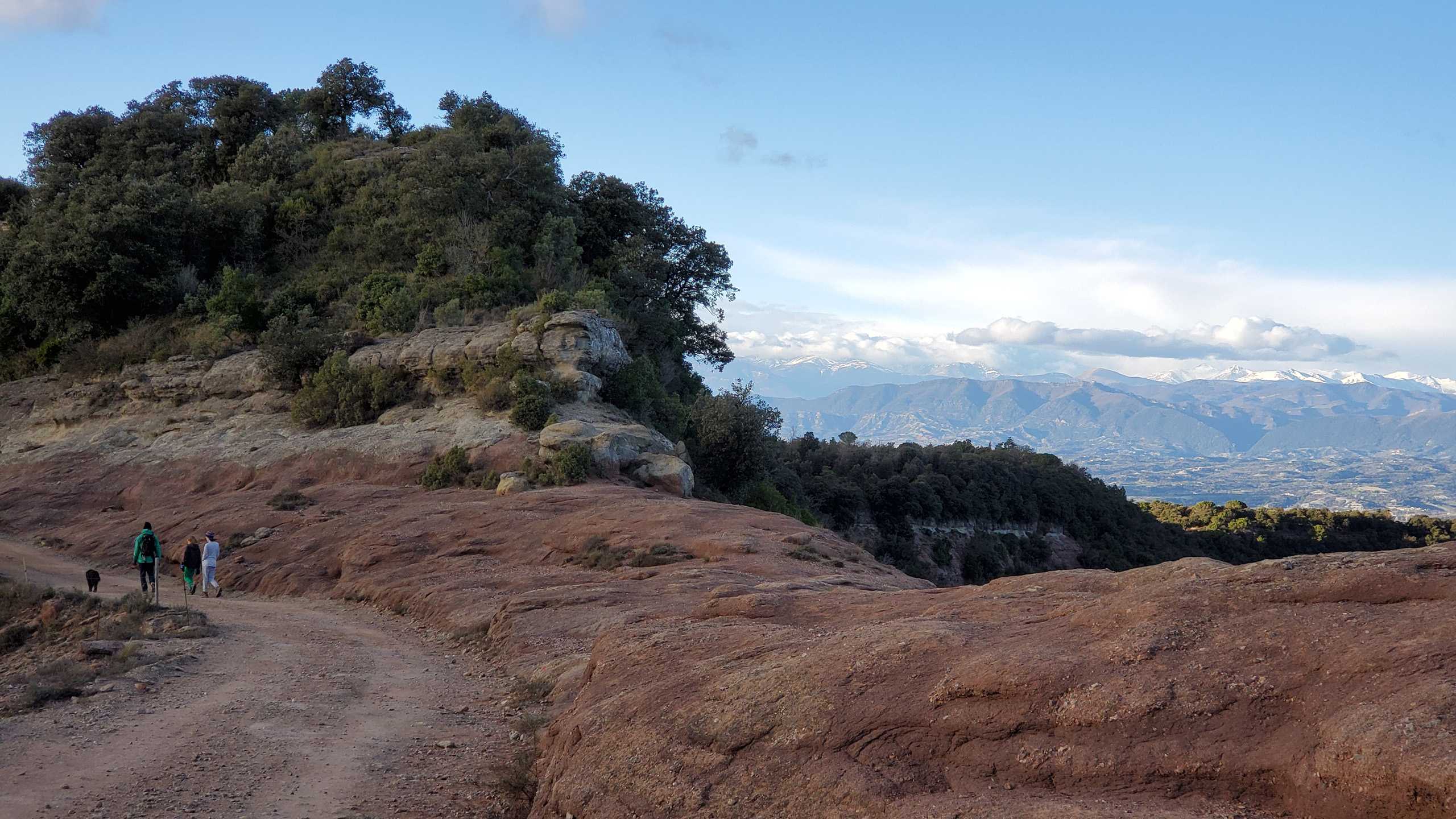
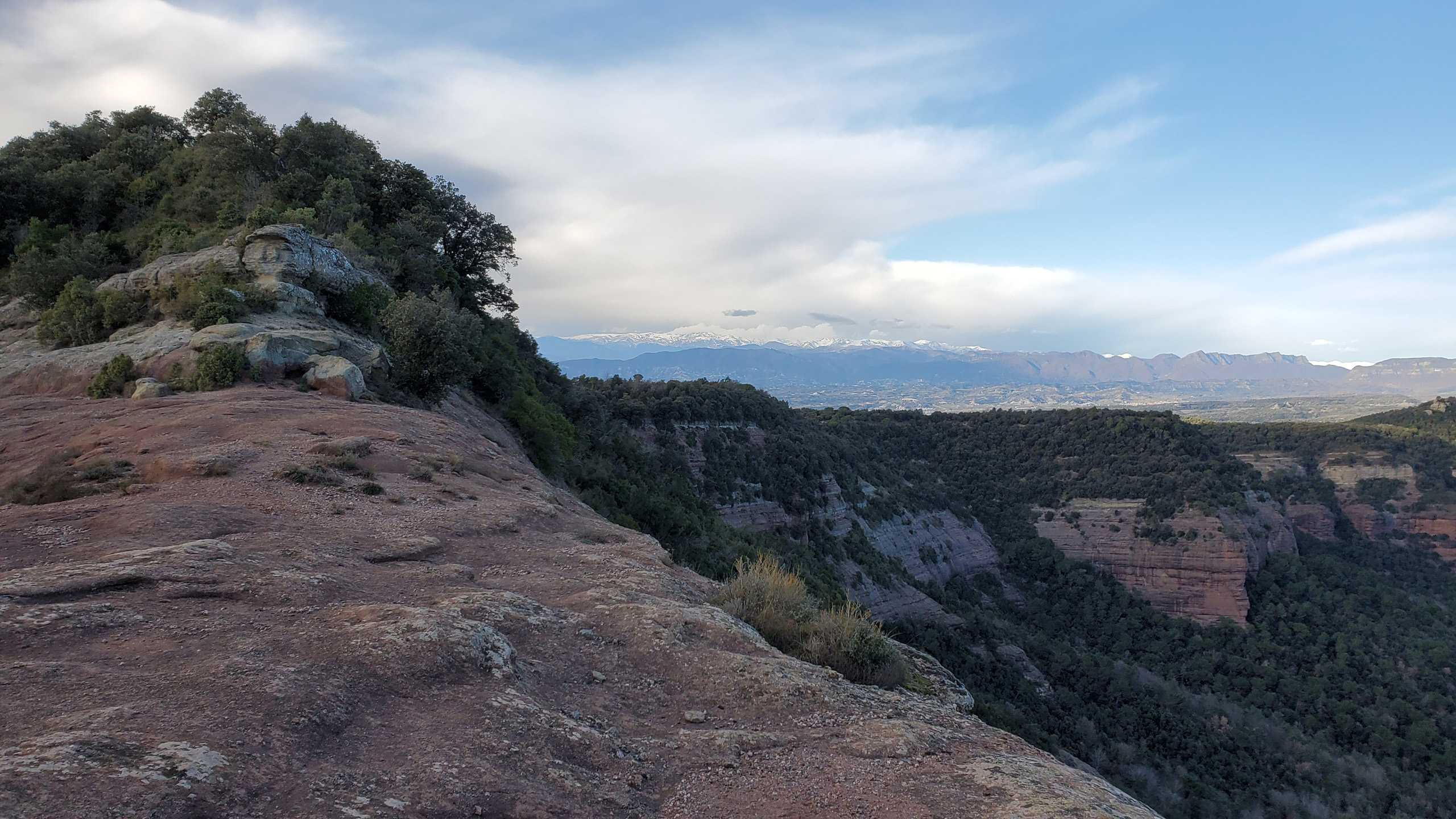
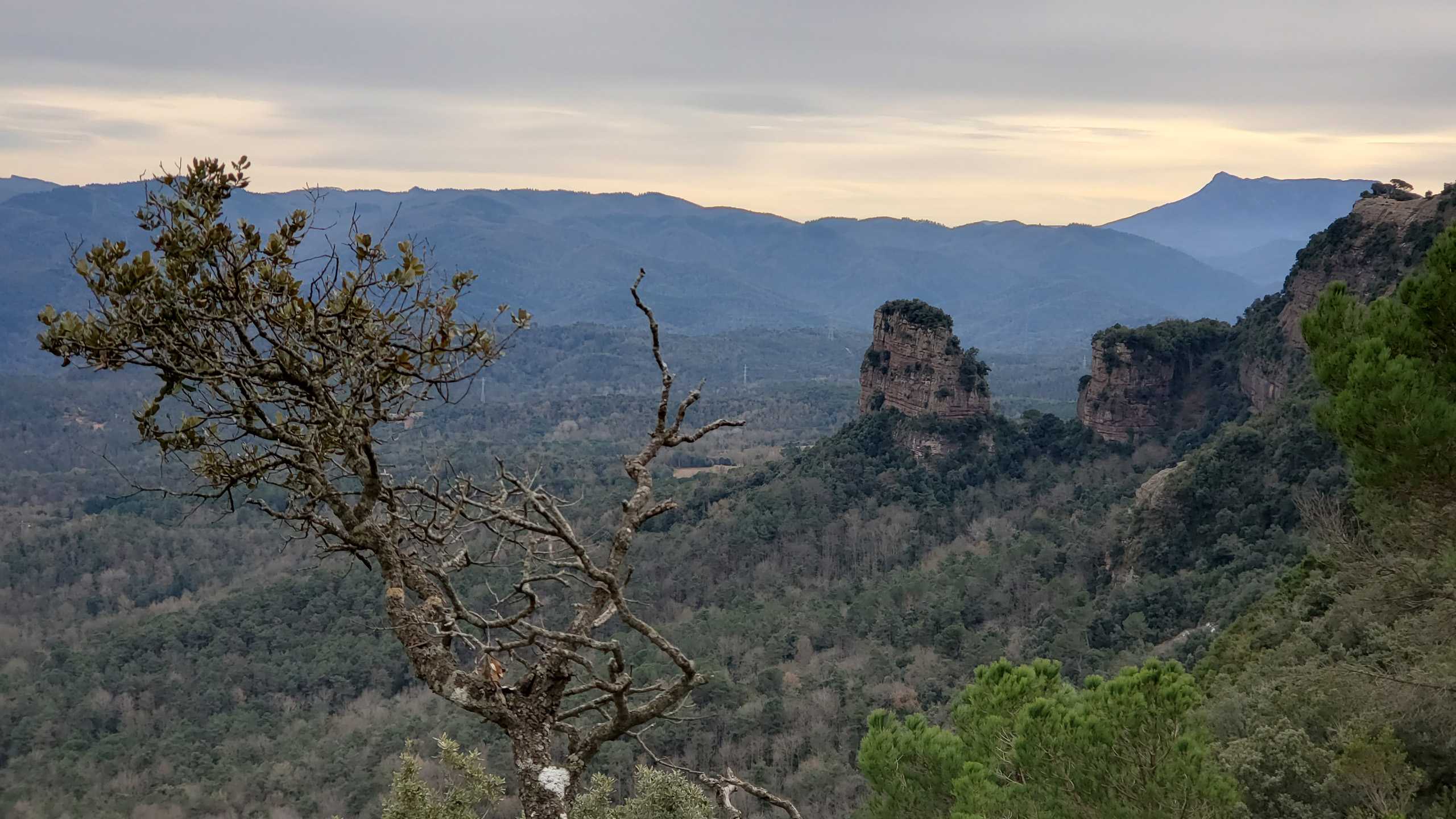
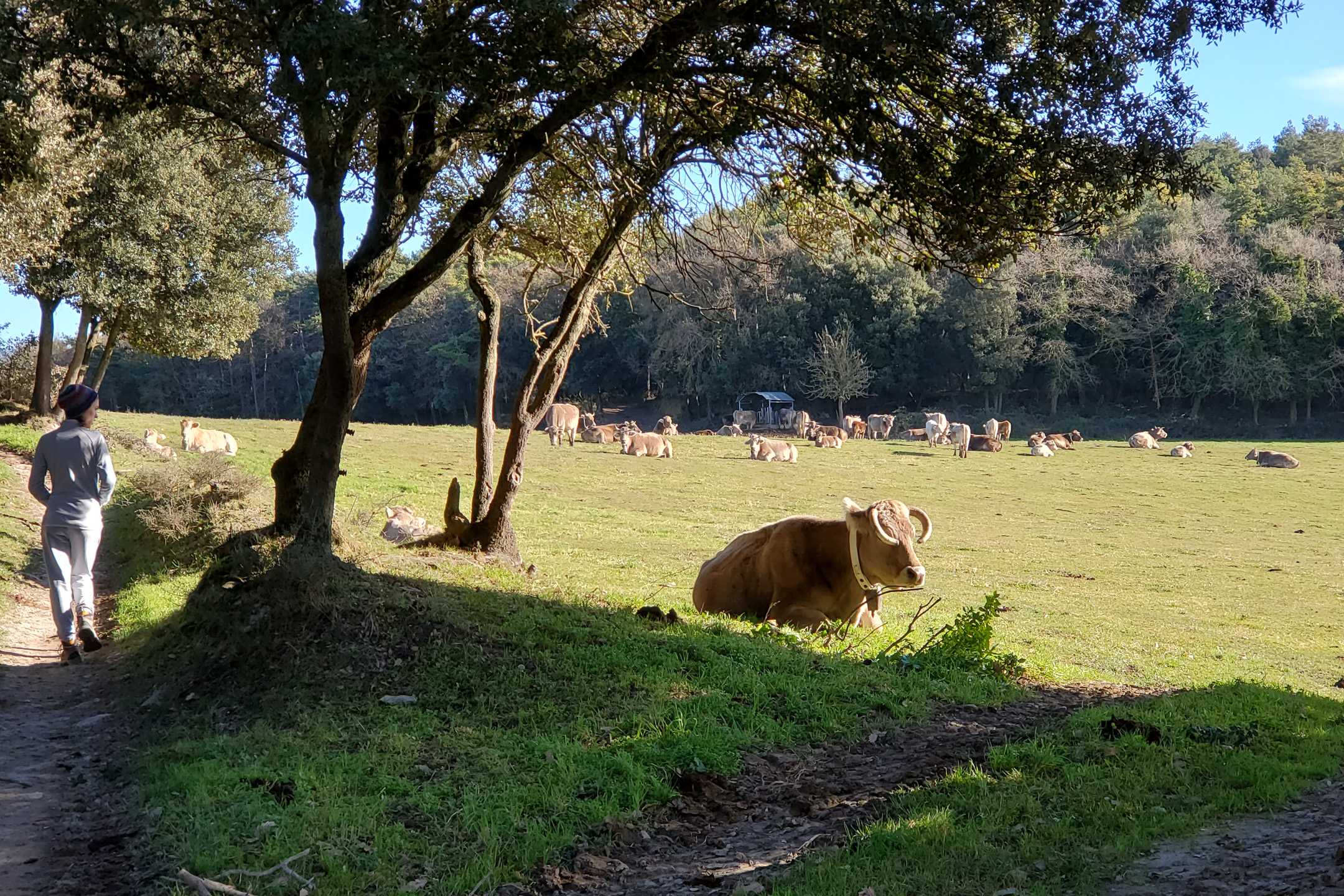
Rolling pastures are nestled between the hills.
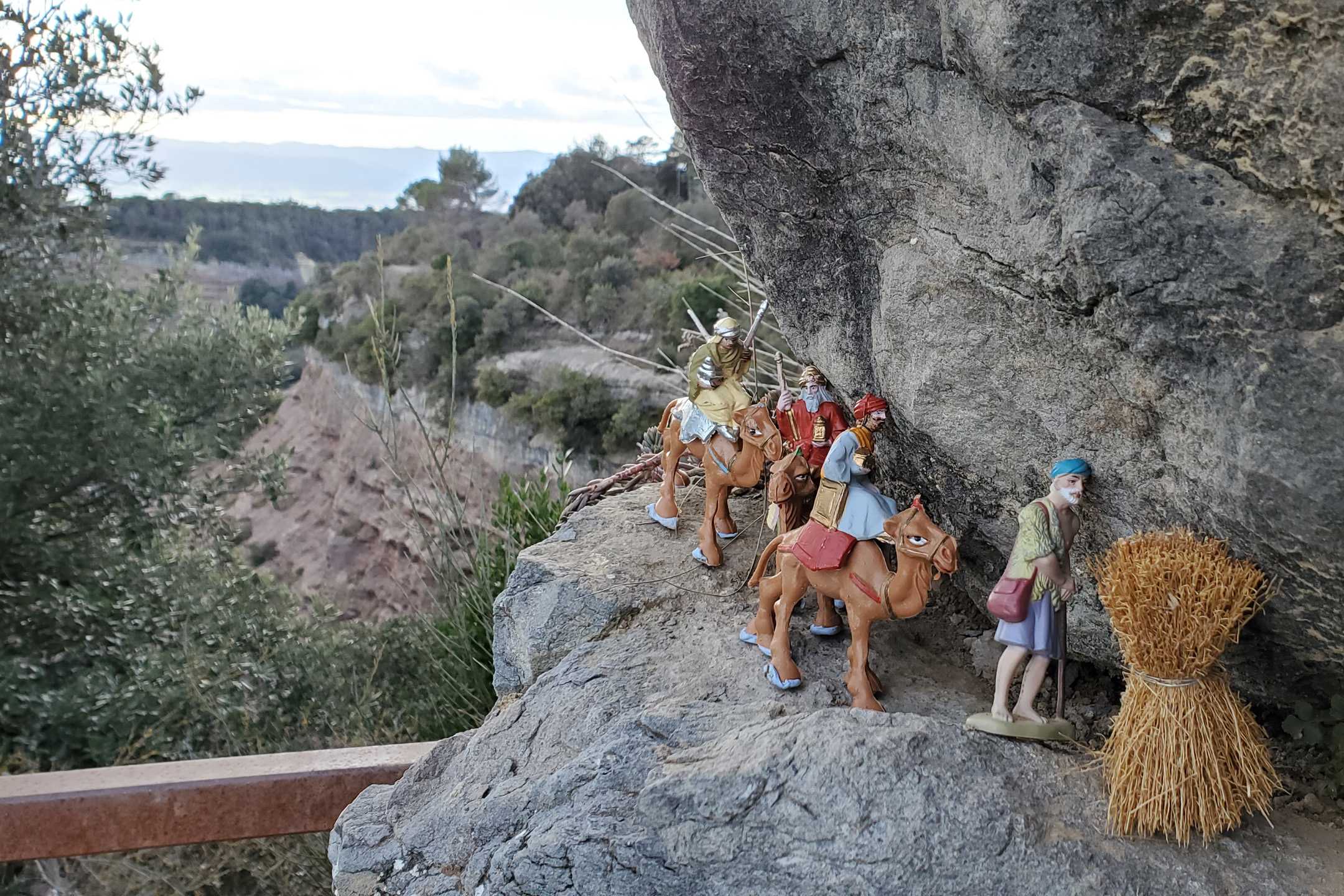
Salt de la Minyona, the Maiden's Jump, is a spectacular finger-like crag with a macabre legend, a 150m drop and a panoramic view of Montseny, Guilleries and the cliffs of Tavertet and el Far. Part of an elaborate nativity scene at the Salt de la Minyona:
Below is a view from Salt de la Minyona toward Vilanova de Sau
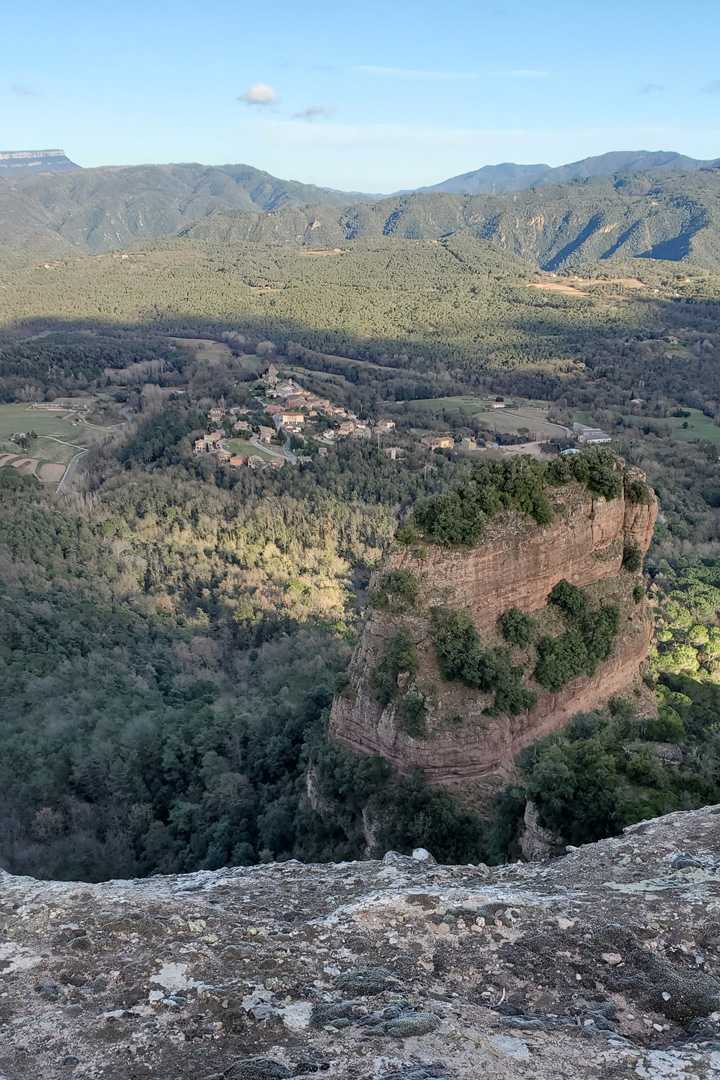
One day, we walked from the house to the Parador Vic-Sau. The Paradores are Spanish state-run hotels, strategically located around the country in historic buildings and/or exceptional settings. We stayed in two during our honeymoon, so finding one hikeable from the house was a treat.
On the way is the overlook at Puig del Far, above the Cingles de Vilanova. Here Madeline looks toward the Cingles de Tavertet from Puig del Far.
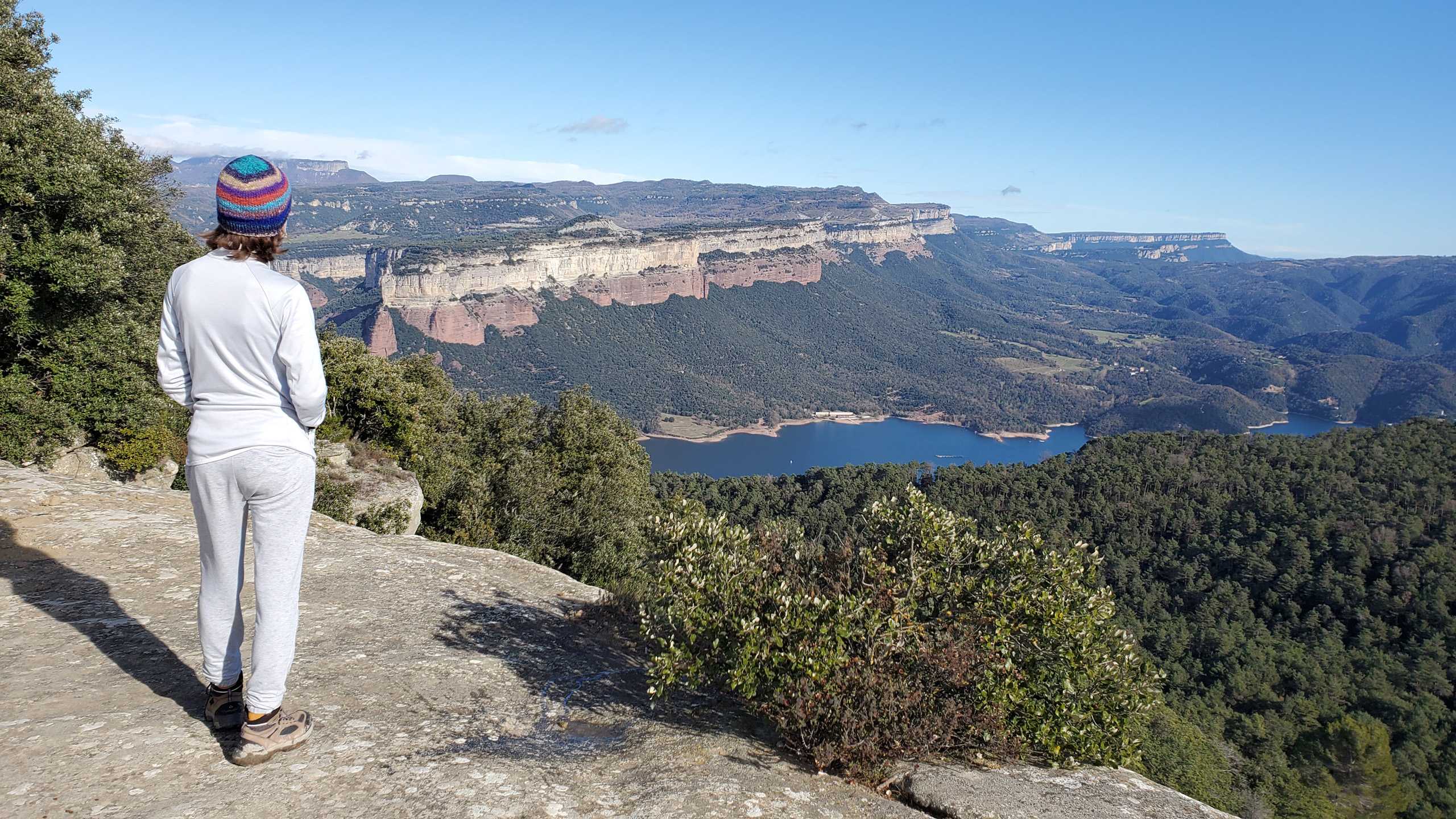
The Pantá del Sau with the Cingles de Tavertet beyond
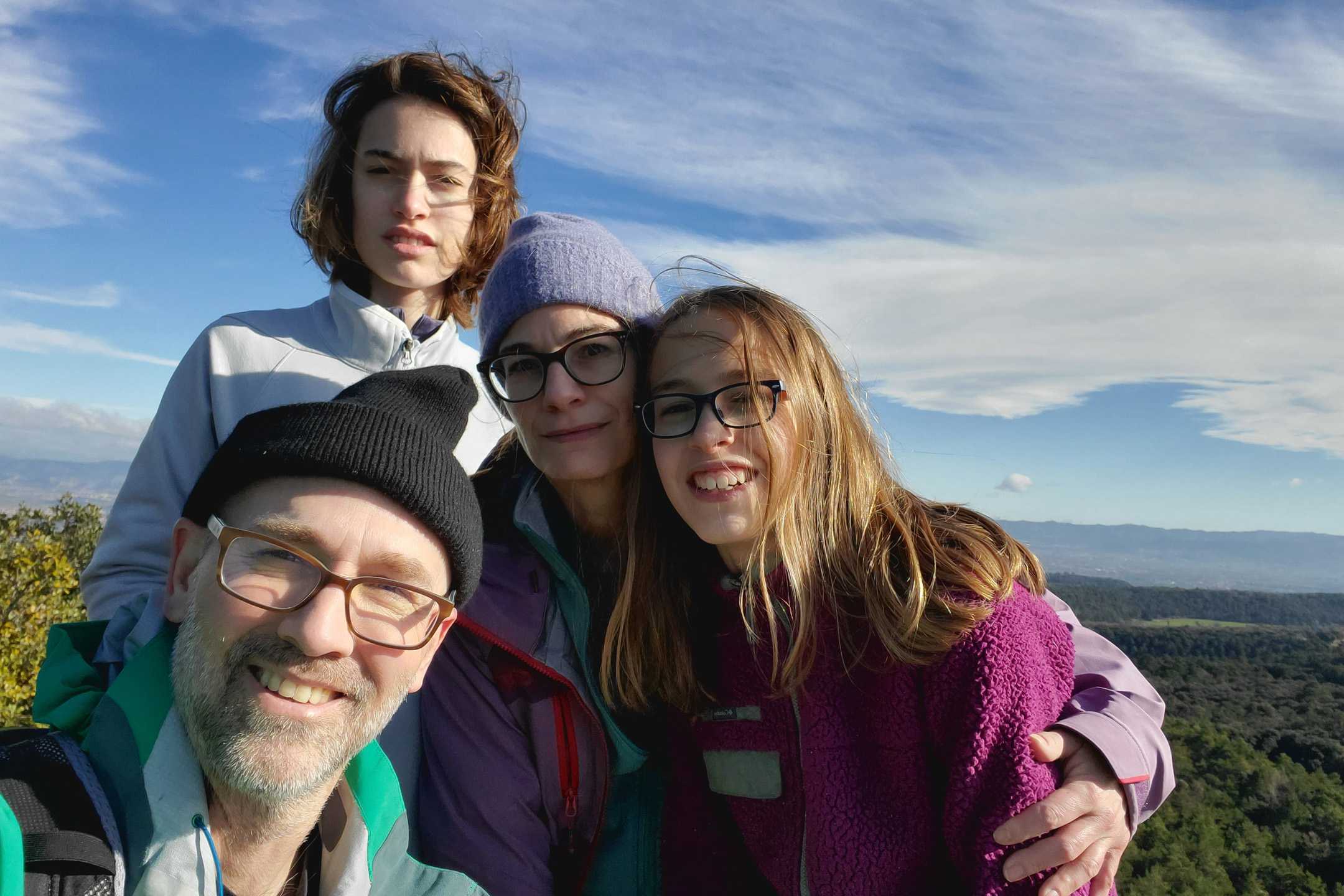
Family selfie at Puig del Far
At the Parador, we decided to risk eating lunch in the enormous and nearly empty dining room. The hotel is positioned for a stunning view of the Pantá del Sau.
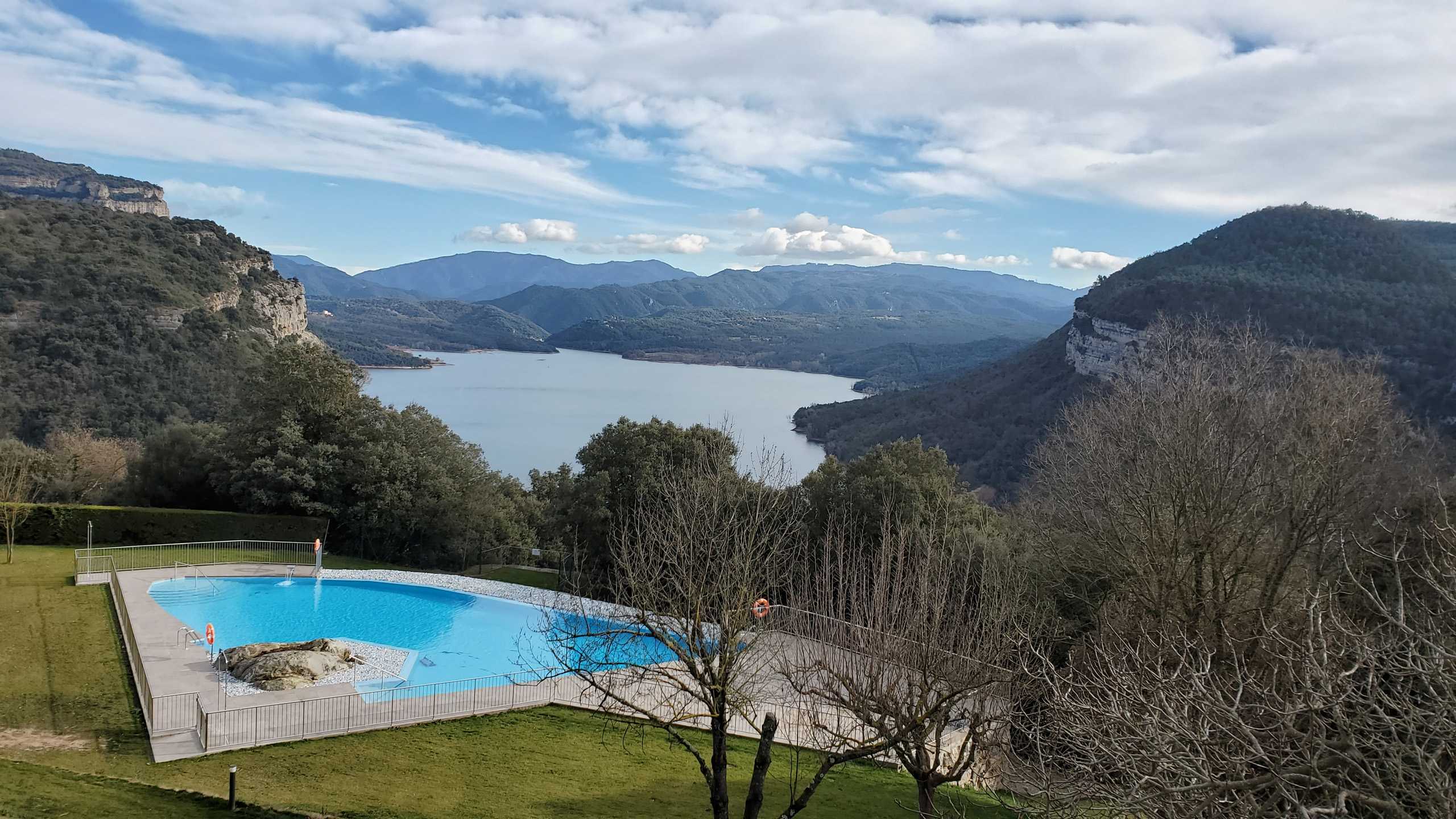
From the Parador, another 4 km walking brings you to the monastery of Sant Pere de Casserres, at the very tip of the long finger of land that projects out into the Pantá de Sau. We didn't have time to add 8km round trip to our hike that day, but returned to the Parador later to complete the walk on our last full day at l'Aguilar. Our first glimpse of the monastery:
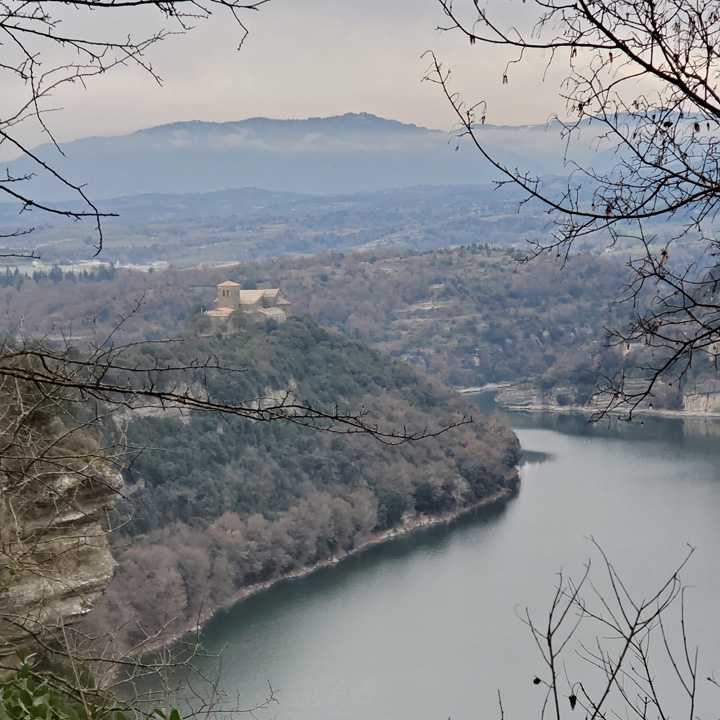
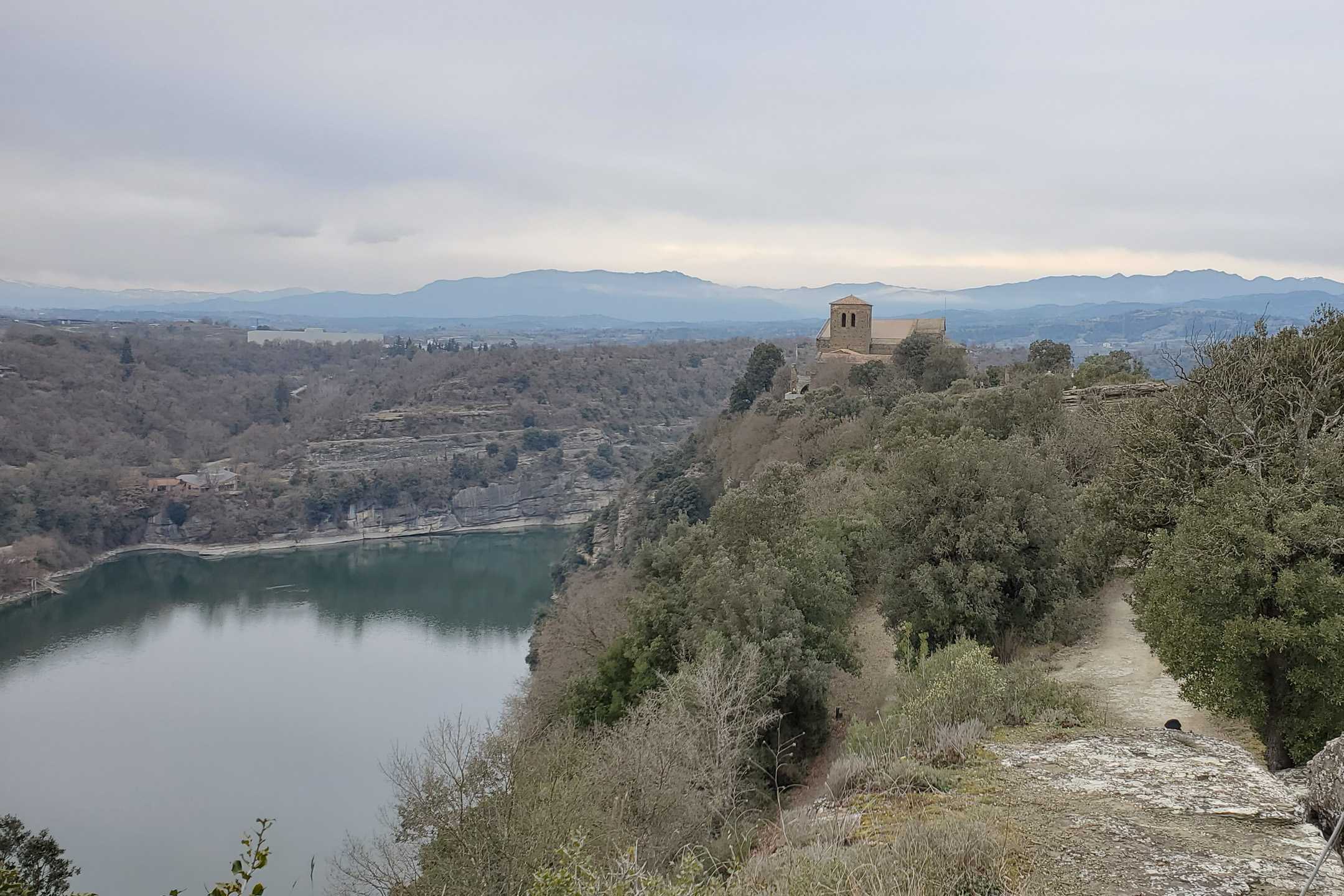
Approaching the monastery after passing through the visitors' center
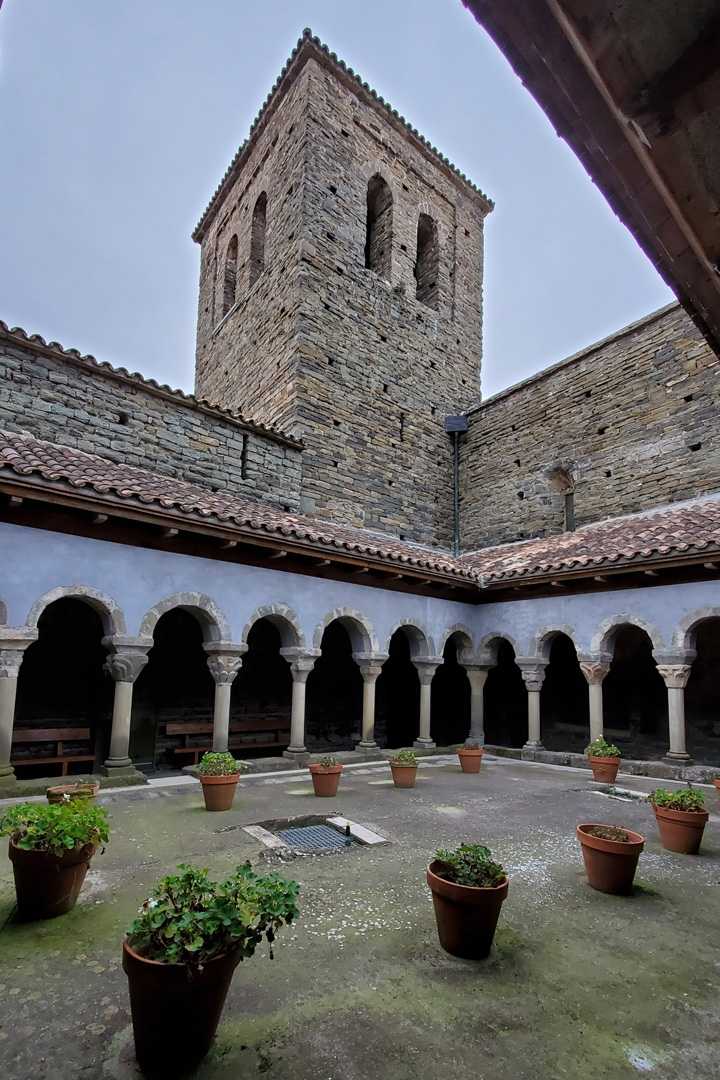
The well-preserved monastery has a beautiful cloister
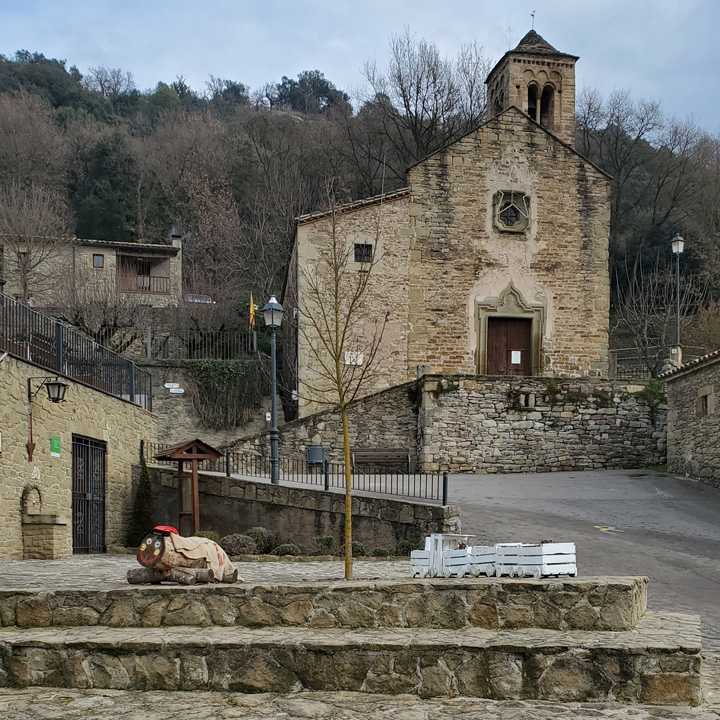
Another day we set out from Tavernoles, the closest town to l'Aguilar. Below is the tiny town center.
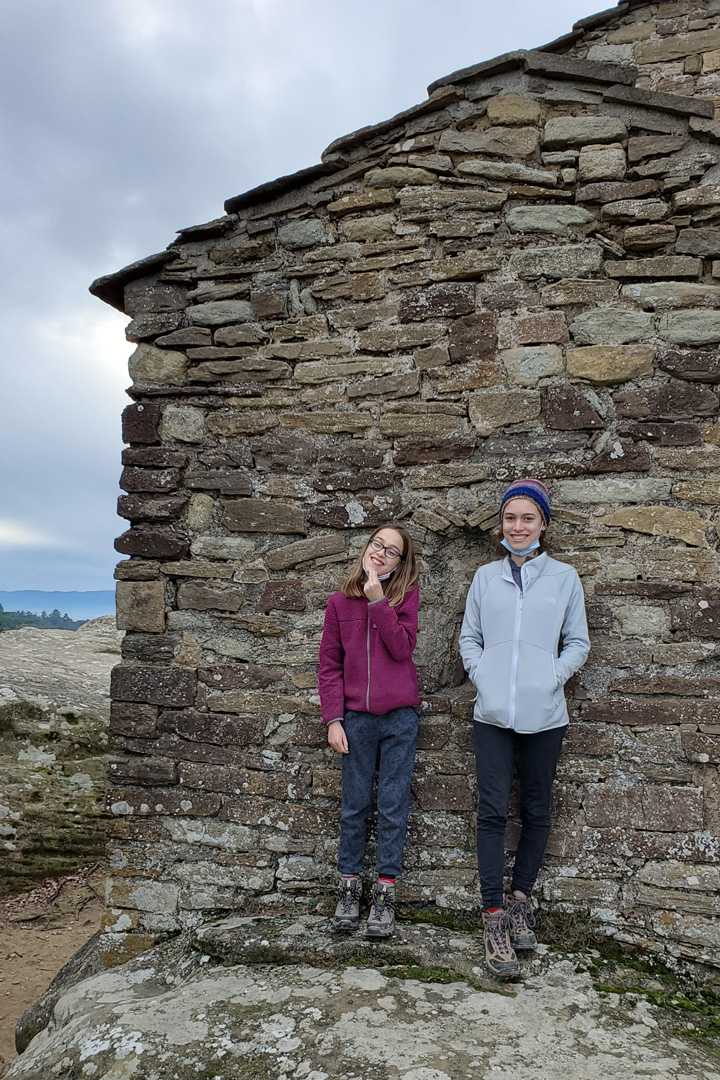
Mad and Henry at San Feliuet de Savassona
We covered a good bit of ground, but really only scratched the surface (our walks are in yellow on the map below).
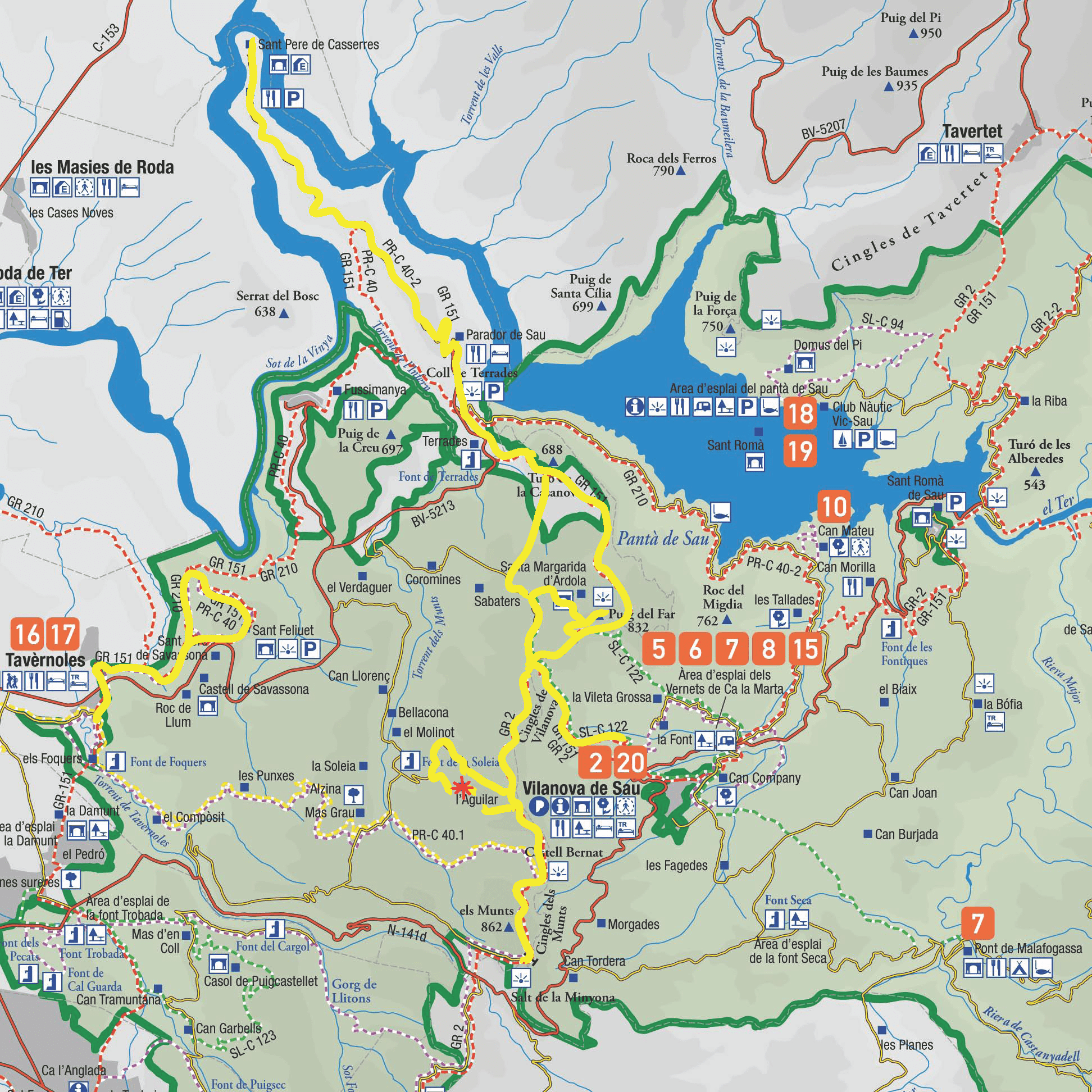
I'm tickled by the fact that l'Aguilar, like most of the surrounding homesteads, is shown by name on the maps of the area – this was also true of el Seradell - this seems fitting for buildings with histories much longer than any inhabitants who are alive today.