Pernil
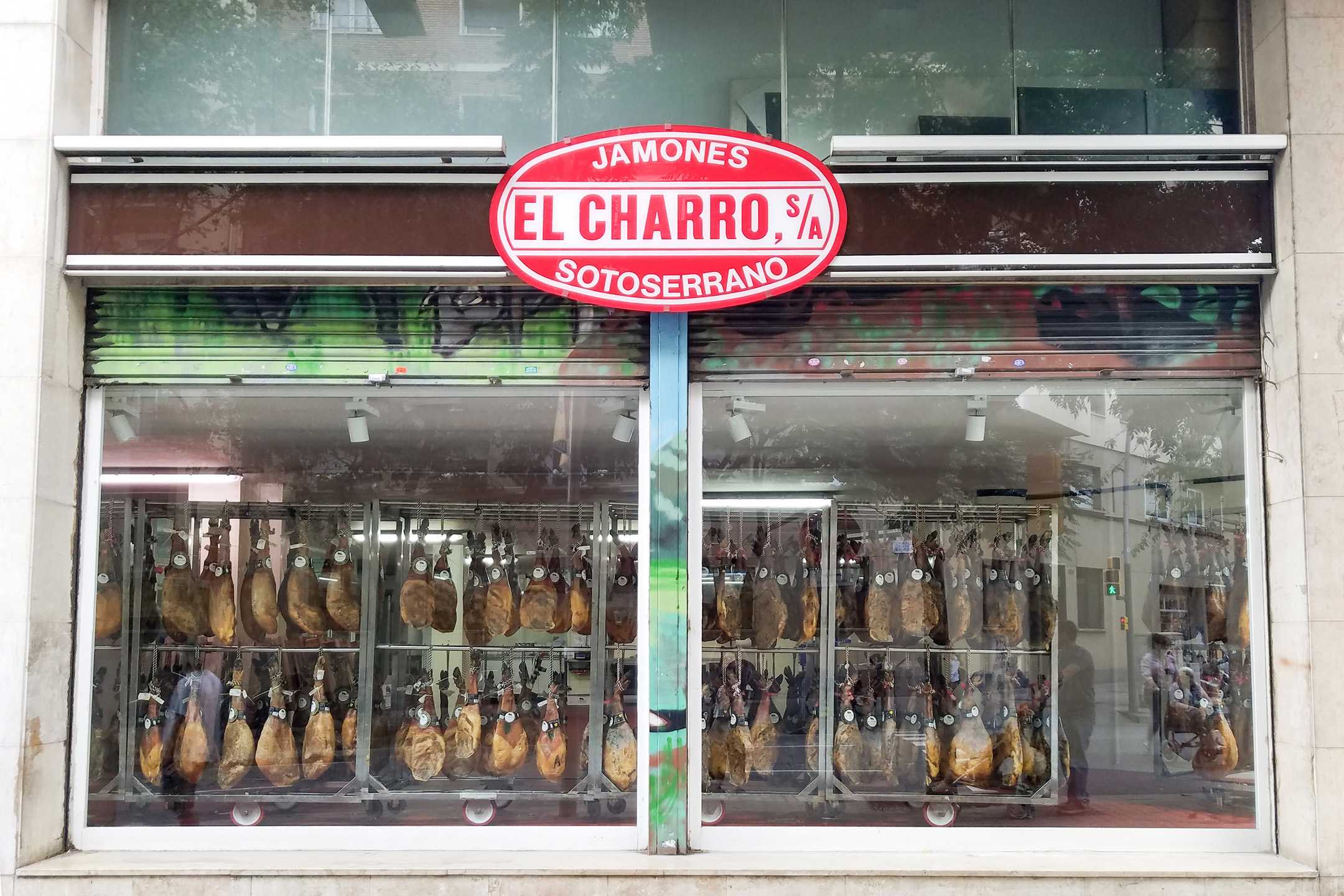 A window display of jamons near La Sagrera
For Ed's birthday last year, I bought him a foldable jamonero – a ham stand – because they are difficult to find in the US, and I wanted to support future prosciutto-curing efforts. After we got back from our Christmas vacation travels, Ed decided to buy a whole jamon leg and try it out. In the typical charcuteria (xarcuteria, in Catalan), the variety is daunting and prices vary from less than €100 to about €500!
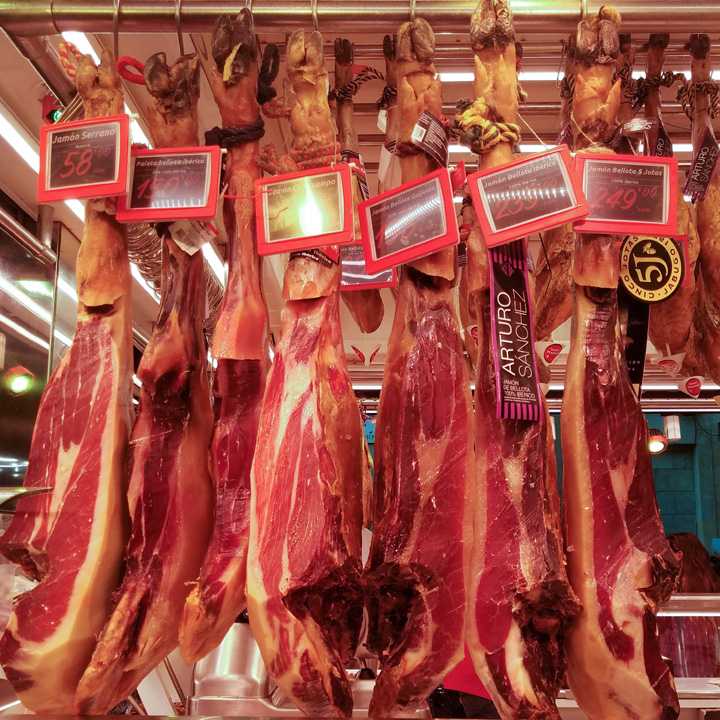 Jamons at the Boqueria
Thinking about how much jamon is consumed at Christmas, I couldn't help but correlate it to the Spanish salary structure: 14 paychecks per year (1 each month, plus an extra in June and December). Clearly, the extra December salaria is necessary for the €500 Christmas jamon…that's a huge outlay when you consider that the median annual salary in Barcelona is in the neighborhood of €30,000.
Some research was in order – it's amazing that we've been here as long as we have without learning this. First off, despite the name recognition of jamon serrano, the gold standard is jamon iberico. Like wines, it is regulated and carefully graded, though not rigorously enough for some. This graphic, from spainfoodsherpas.com, lays out the grading system succintly:
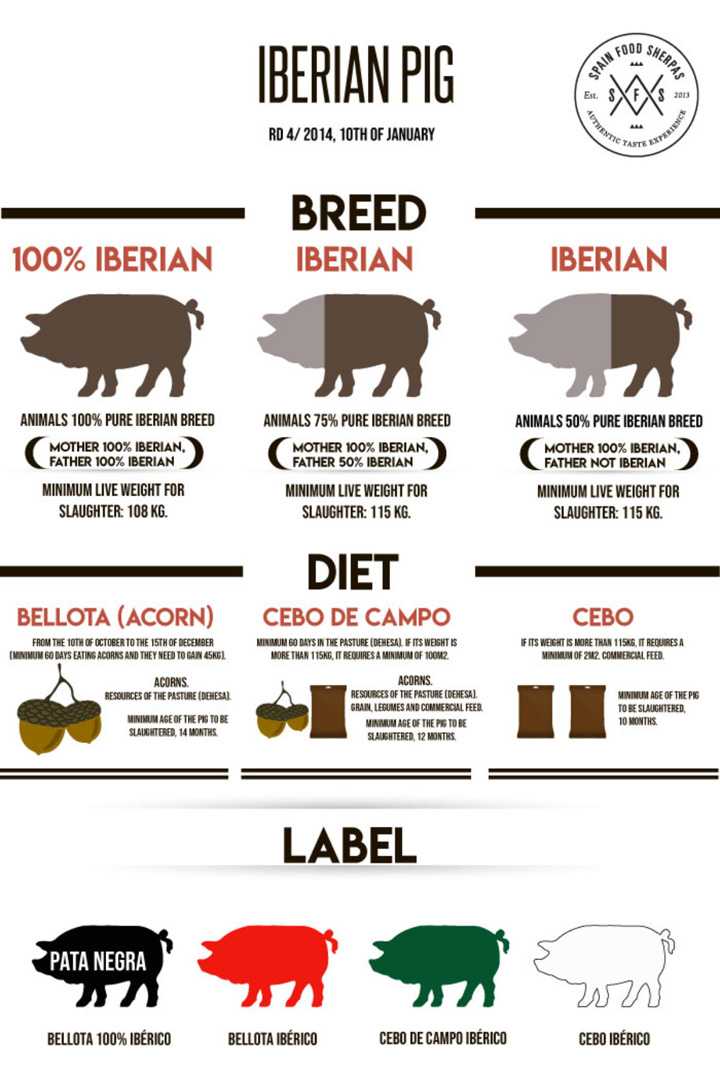
Here's a nice explainer about jamon in my favorite Spanish cooking blog, written by a Massachusetts native now settled in Spain.
For our first foray, we bought a paletilla – a shoulder or foreleg – which weighs about half as much as a hind leg.
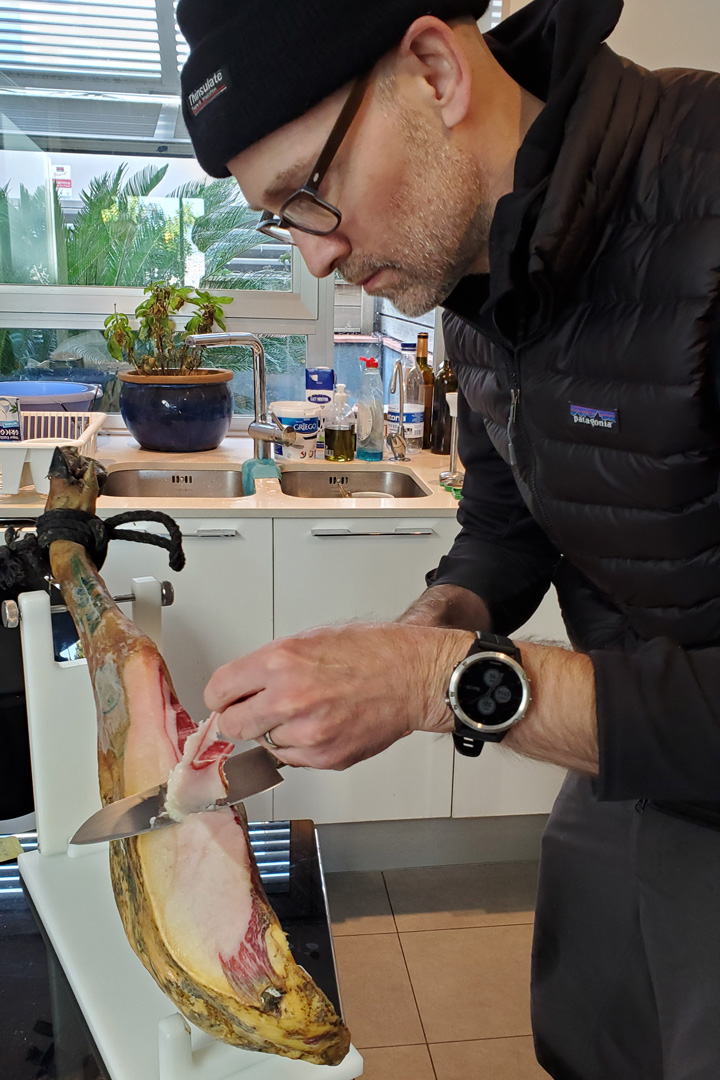
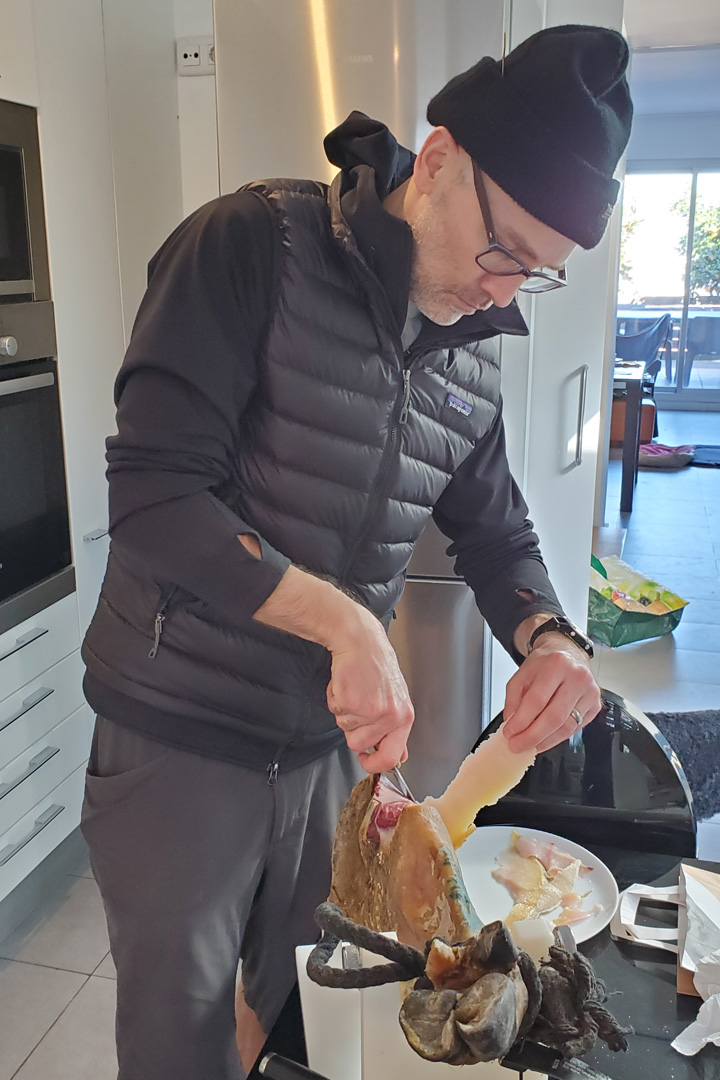
Getting set up and making the first slices.
For further reading: