Eleccions
Valentine's Day was election day in Catalonia this year.
Pro-independence parties gained a majority of the votes for the first time in an election. However, they lost over 600,000 votes compared to the previous elections amidst the lowest voter turnout in history (+/- 52%). The PSC under Salvador Illa won the most votes in Catalonia for the first time in history. Illa stepped down as Spain's health minister to run, I suppose in part taking advantage of his name recognition during the pandemic. Needless to say, the PSC is not one of the pro-independence parties – it is the Socialist Party of Catalonia, democratic socialists by ideology. With 33 seats, PSC tied with the pro-independence ERC for seats. JxC, also pro-independence, earned 32 seats. Because of this near tie, almost a week later it is still up in the air who will win the presidency of the Parliament.
5 other parties received enough votes to be represented in Parliament, including the far-right Vox who will enter Parliament for the first time with 11 seats. Catalonia is clearly experiencing a resurgence in right-wing sentiment like other parts of the world – Vox is one of 4 far right-wing parties who ran; the other 3 didn't receive enough votes to win seats.
After the brutal and interminable 2020 campaign season in the US, it's especially interesting to note the differences between campaigns here and in the States:
- The officially sanctioned campaign season lasts just 2 weeks, starting 2 weeks and 2 days before the election.
- 5 days before the election, a legal ban on electoral opinion polling publication and dissemination begins.
- 2 days before the election, official campaigning ends.
- All political campaigning is banned for the 24 hours before the election.
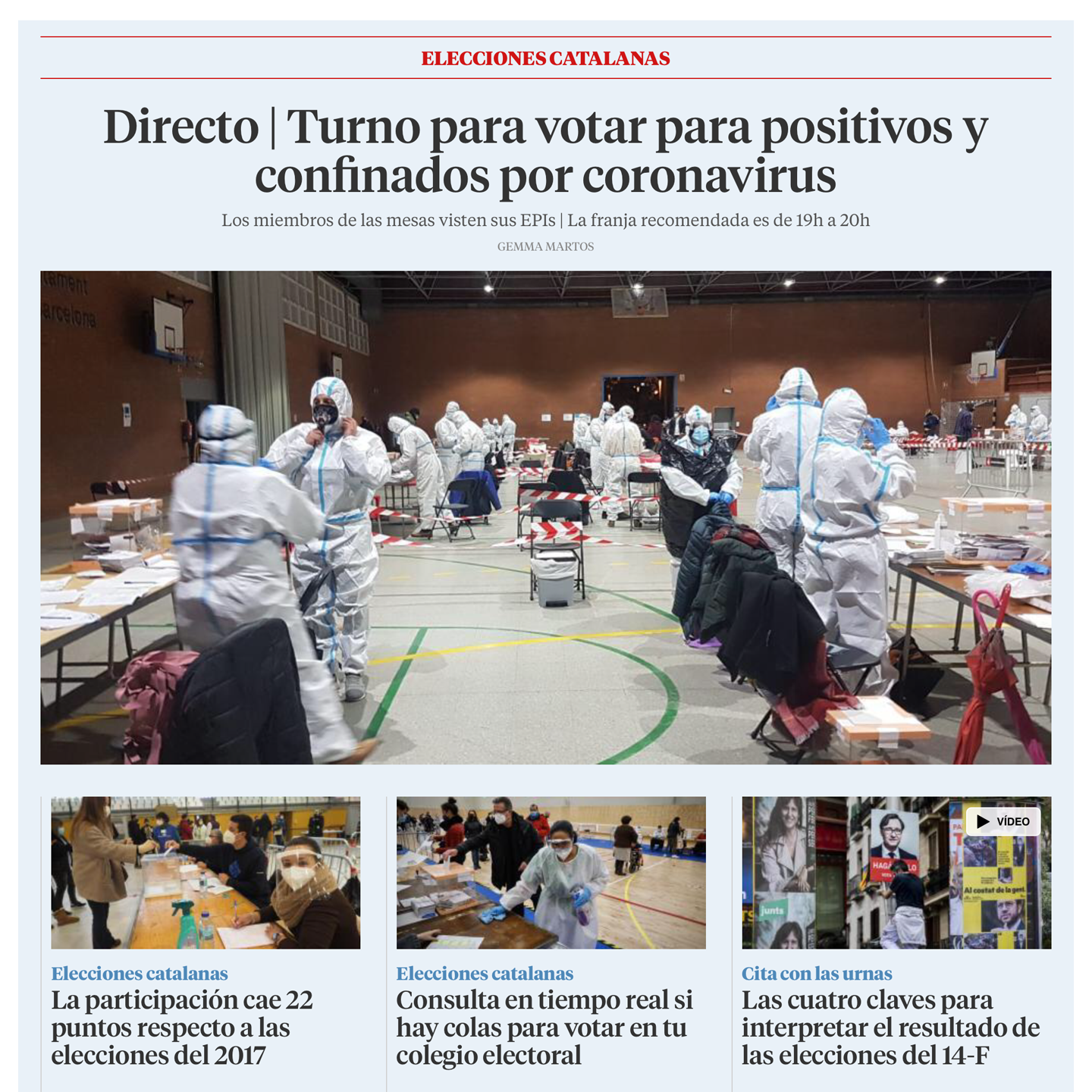
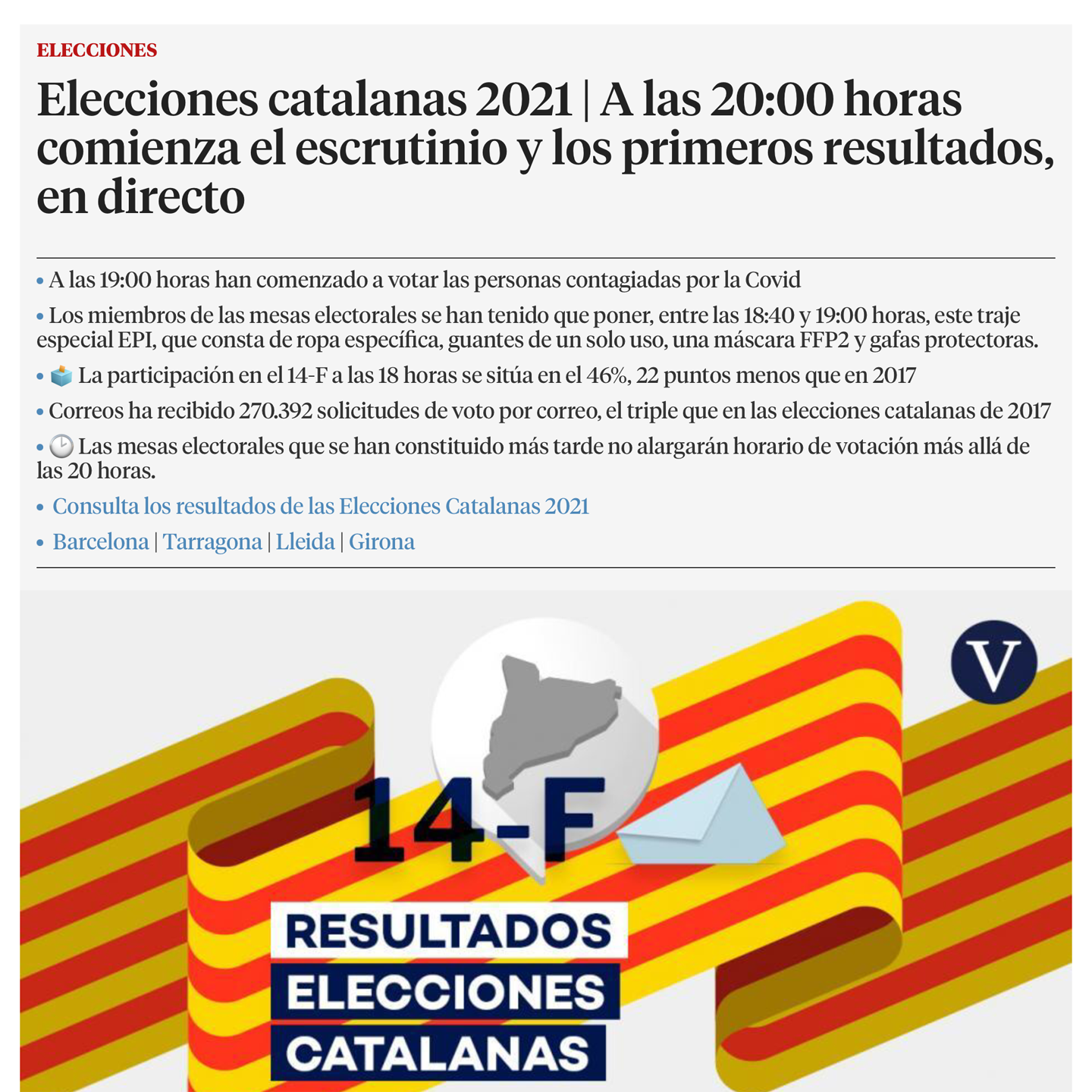
As in the US, the pandemic affected the voting process. In January, the Catalan government attempted to delay the election to May due to the pandemic, but this was ruled unacceptable by the Catalan High Court of Justice. Mail-in voting was much higher than usual but less than 10% of the vote. Maybe this is because officials also established protocols for in-person voting: they designated a time band for covid-positive voters, at the end of the day. Before the start of this time band, election workers suited up in full PPE to attend them.
A detailed explainer is here