Confinament v2
I haven't talked about the pandemic here since school started last fall. It's not really thrilling copy, but it's been interesting to watch the parallels and divergences between Spain and the US. Between Barcelona and Madrid, even.
School All students were required to go back in person in September, except with special permission. We have been very lucky; neither Mad nor Henry's class has had to quarantine once. In contrast, I think the 4th graders have been quarantined 4 times. Quarantined classes pivot to online instruction for ~10 days. When a case is discovered, the health department (Salut) sends a team to test everyone in the class. They send results to the families, for privacy, but the school administration can obtain results if necessary (e.g. for foreign families who need help accessing the system). Every school (public or private) has a dedicated liaison to Salut, and access to case and quarantine data for all Catalan schools. If a school reached a certain number of classes in quarantine, it was required to close. School closures have not been in the news since the fall, which I interpret to mean it hasn't been pervasive since then. Classes at Princess Margaret are carefully sequestered by cohort, with special plans in place for arrival and dismissal, lunch, and recess to eliminate crossover. There is no prophylactic testing as there is now in MA. Earlier in the year, positive cases were showing up primarily in teachers. By now, many of the teachers may be vaccinated – vaccination is still in process for essential workers, in parallel to age-based phases.
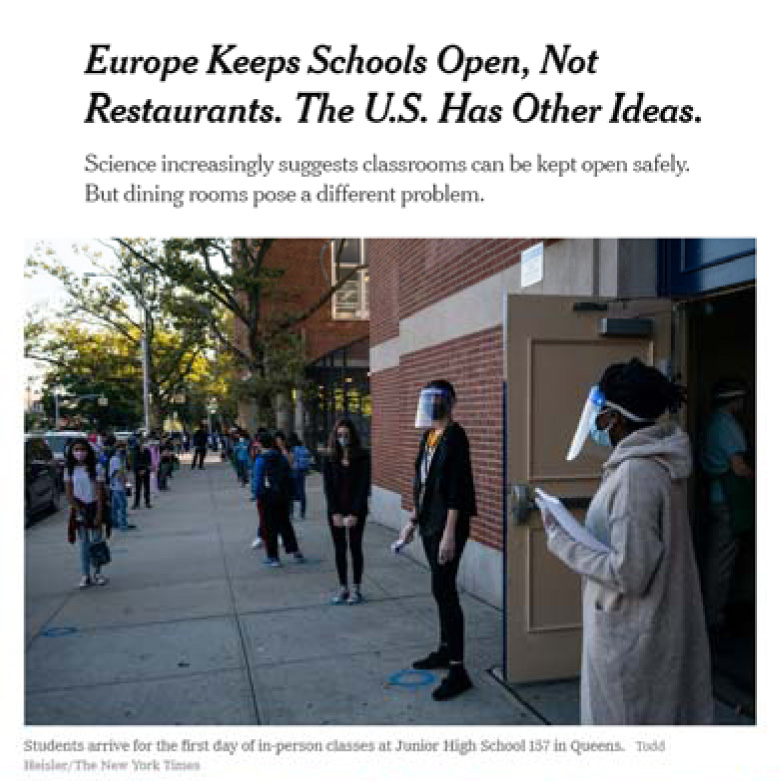
There's a strong commitment to preserving as much normalcy as possible. Spring class trips are still going ahead, in modified form. Sadly, the 6th grade ski week did not happen (how could it have?). Instead, they'll have 3 full-day field trips. The secondary students (grades 7-10) will still be traveling, with some modifications. Mad will be going to Tenerife instead of the usual London – we are jealous!
Restrictions and Caseloads The ebb and flow of the caseload in Catalonia has been surprising similar to the Northeast of the US. The second wave began in late October, a third peak happened just after the Christmas holidays and a smaller spike happened after Easter week.
Like the US, Spain is a Federalist country, with the Autonomous Communities exercising significant powers of self-governance. Last fall, the Gobierno enacted a second State of Alarm on October 25, lasting 6 1/2 months. The State of Alarm provided legal justification for the Autonomous Communities to implement a curfew (toque de queda, literally touch of stay) and other restrictions like perimeter closures (to prevent non-essential travel, especially between first and second residences). The State of Alarm gave the ACs latitude to adjust the curfew by one hour on each end. In Catalonia, it has been 10pm to 6am.
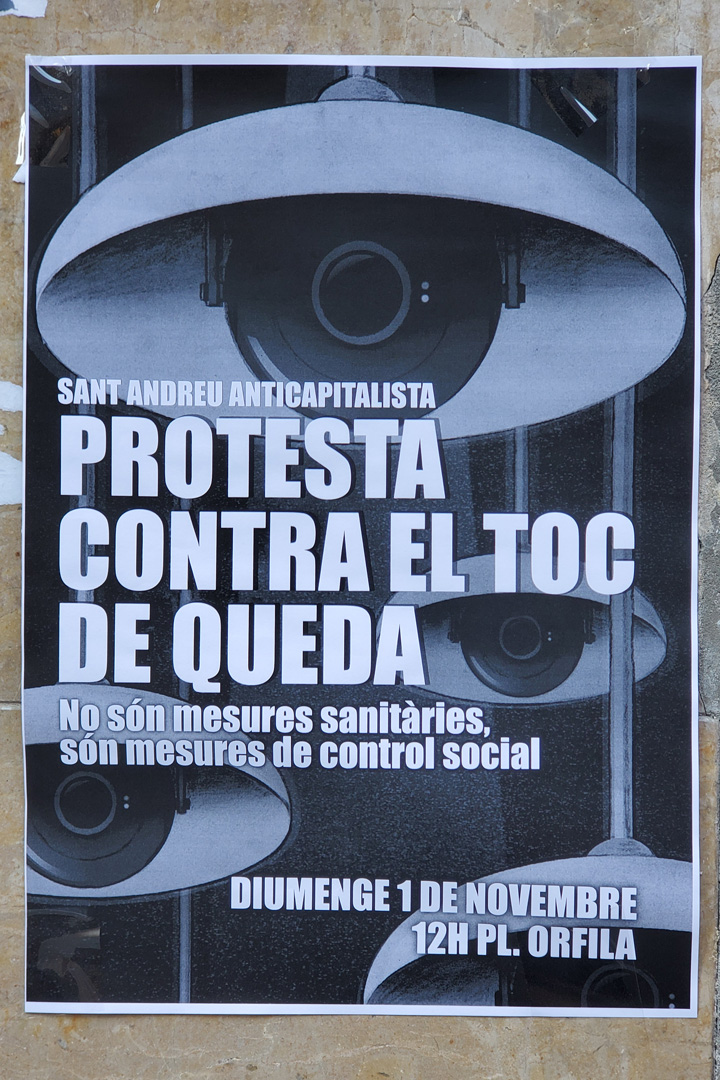
This has been a critical mitigation measure for a country whose young adults typically socialize by gathering (and drinking) outside until the wee hours of the night/morning.
In general, the restrictions during Lockdown v2 have been less onerous, acknowledging what we've learned about the virus since the draconian first lockdown.
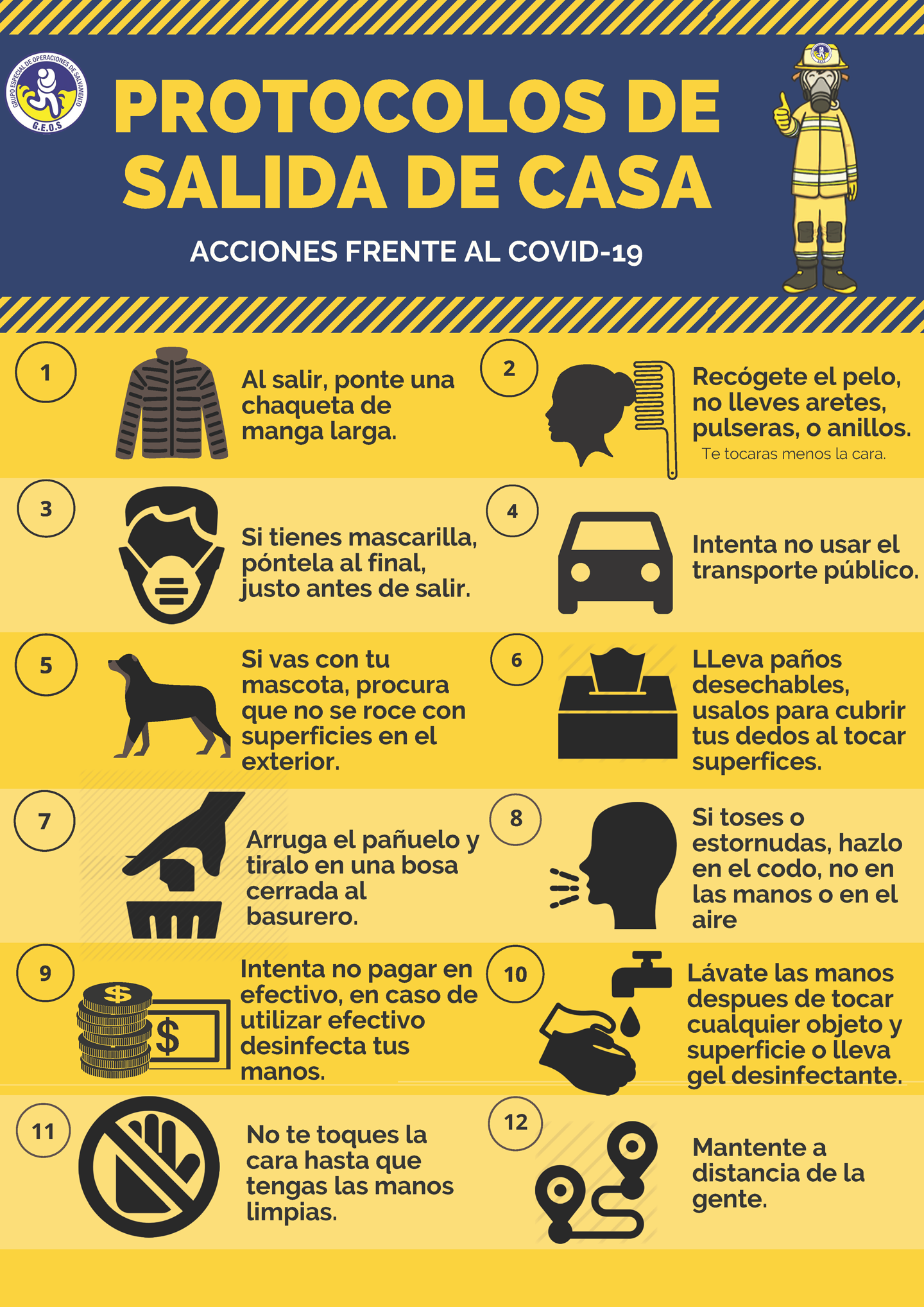
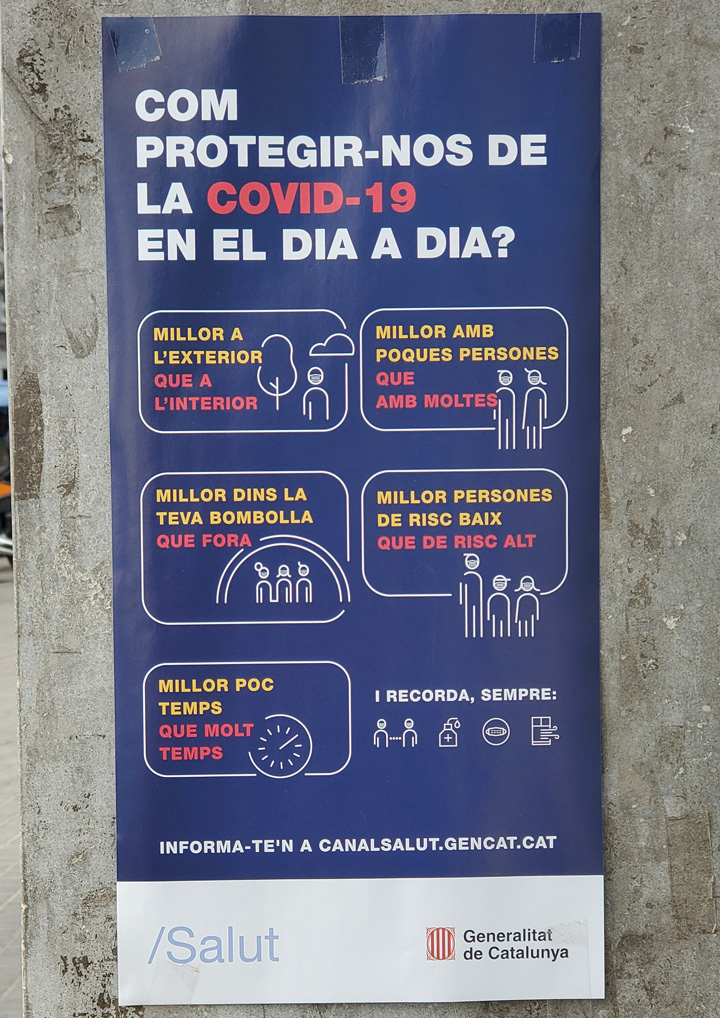
Our understanding of Covid has evolved, and with it the recommended protocols. Remember when we were sanitizing groceries?
In Catalonia, the board tasked with managing the restrictions has been consistent and transparent. Every 2 weeks, they have made adjustments in response to the caseload data. There have been a few times when they have delayed their decisions by a few days or back-pedaled, mostly when caseloads were quickly escalating or in anticipation of holiday periods. Around Christmas, the Govern admitted that they would have required restaurants to close for all but takeout if they had more financial aid to provide to owners.
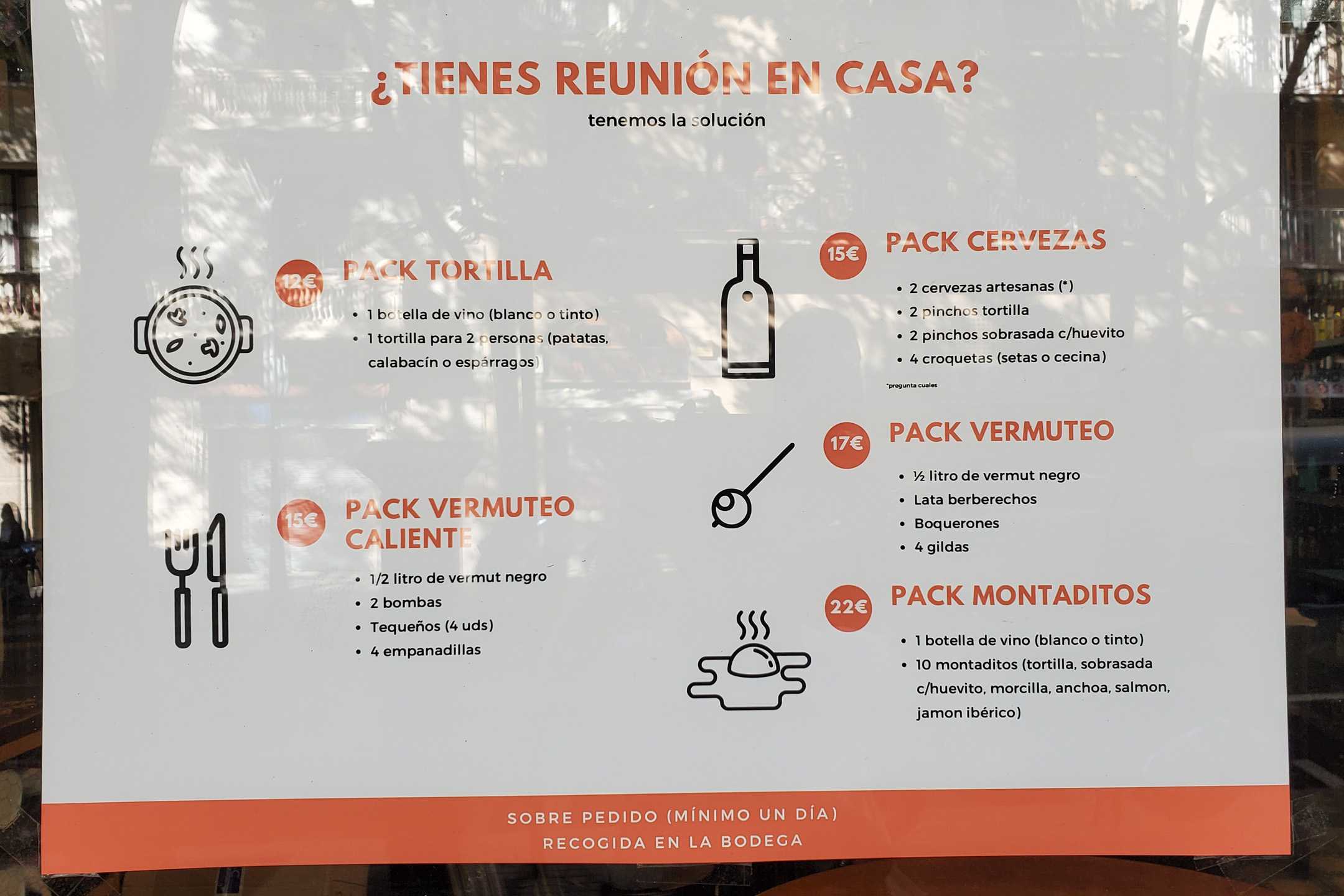
The continuously re-calibrated restrictions have focused on 3 areas:
- Restricting restaurant hours, at its most restrictive ~8-10am and 1-3.30pm. Dinner service has been take-out only for several months.
- Limiting non-essential shopping, especially malls and large stores.
- Evaluating the comarca closure. In the end, except for Christmas and Easter (Mar 15-Apr 9), this remained in place most of the time. So much for weekend trips. Gyms opened and closed, but less frequently. Other restrictions have been more static: night clubs have remained closed, and cultural venues have been open at reduced capacities.
As a rule, the Community of Madrid has been much more permissive than the Govern.
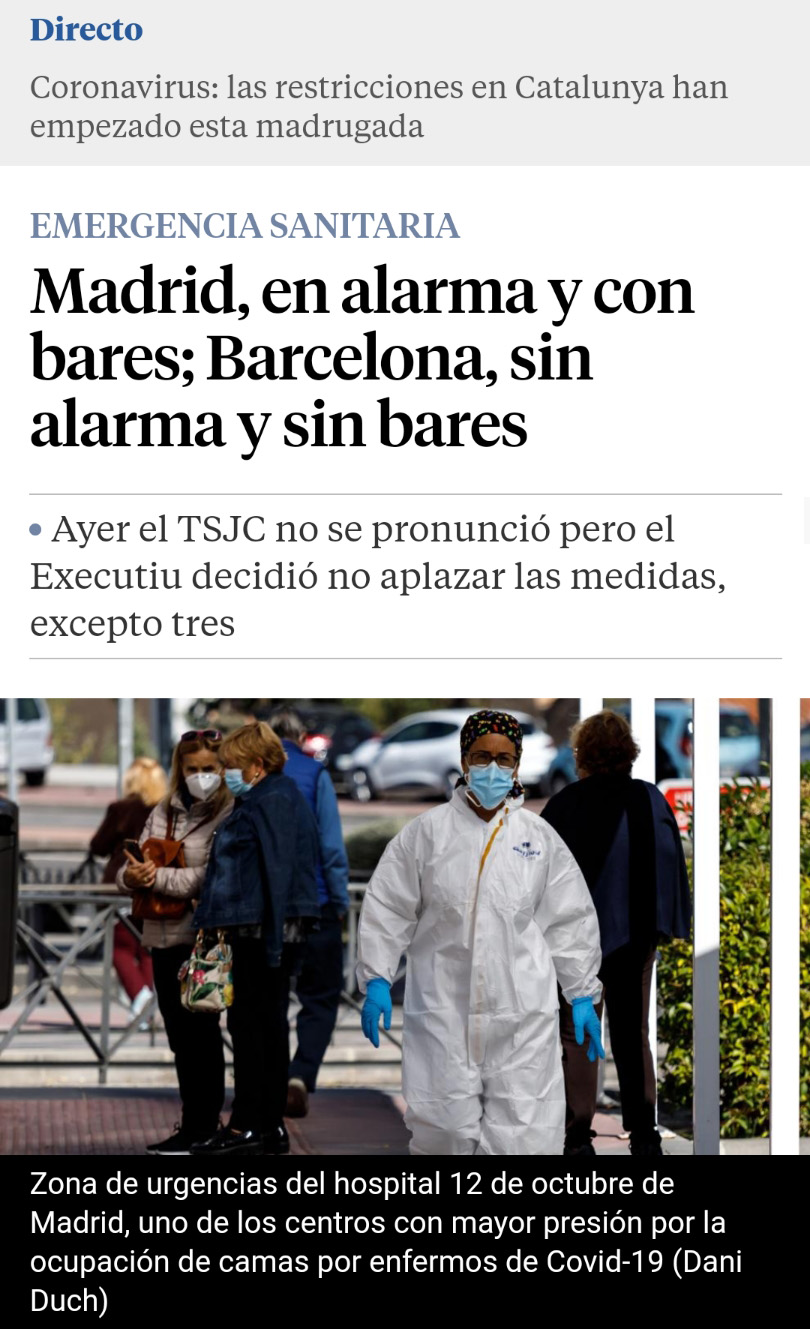
Before Easter week, Madrid announced they would not close their community's borders. Every other AC responded by saying theirs would be closed, leaving landlocked Madrilenos' with no way to reach the coast.
Last week, April 26, the Catalan government finally lifted the county perimeter closure. We have queued up several day trips to take advantage of this; sadly, it was rainy this past weekend, so they'll have to wait one more week. Barcelona's comarca is not much larger than the city itself, so we haven't been able to leave the city except during Christmas and Easter vacations.
In anticipation of May 9, there is much discussion about which restrictions can legally persist, especially whether the Communities will have legal standing to extend the curfew; the Supreme Court will have the last word about this. the Catalan Govern has announced it will end the curfew and open its borders. I hope it lasts!
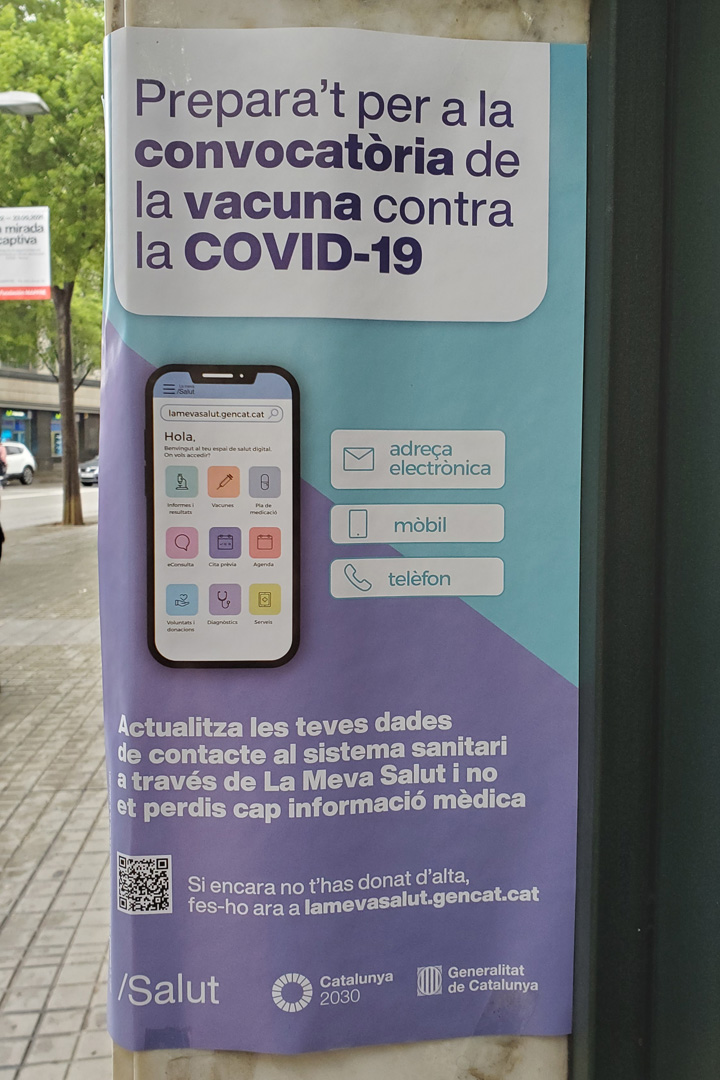
Vaccination Unlike the States, Spain's national healthcare infrastructure is perfectly suited to efficient vaccine delivery - of course the problem here has been vaccine availability. The ACs have consistently been using most of the vaccines they have received, and there is 0 discussion in the Spanish media of outreach or scheduling frustrations; these are non-issues. Vaccination teams are tracking down homebound residents, even in remote locations. The pace of vaccinations is finally ramping up here, with about 25% of the population now fully vaccinated and close to 100,000 shots administered daily in Catalonia (pop. 7.6 million). They are working within a series of well-defined age and risk factor bands and contacting residents ("don't call us, we'll call you"); there is no way to snag appointments by sitting on the web for hours on end like in the US. It now seems possible that 50-59 year olds (hooray for 50!) will be invited to get a shot starting this month. I'm hopeful that the adults in our family may be (mostly or partially) vaccinated by late June. We've been wondering how "we'll call you" works for illegal immigrants, who Spain has pledged to vaccinate no questions asked…we'll see if legal non-citizens are called up promptly or not. It's a cruel irony that if we were home we'd be vaccinated in time to travel this summer, but here we have to wait, possibly until the very time we need to depart.